

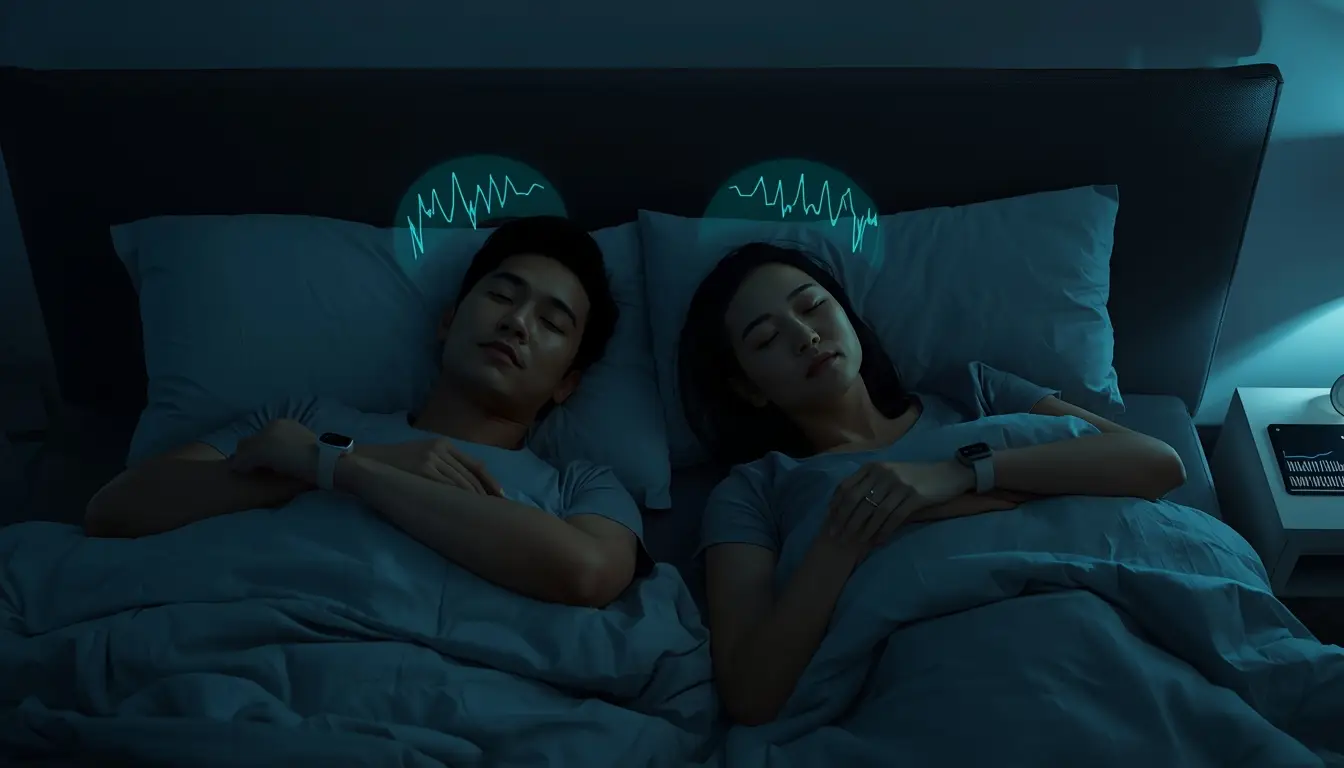
Wearable Devices That Improve Sleep: How Biometric Tracking Works
Key Takeaways:
- Counter-Intuitive Insight: The most valuable function of a sleep tracker is not the “Sleep Score” itself, but the “negative feedback loop” it creates when you see how specific habits (like late meals or alcohol) visibly destroy your biometric data.
- Specific Number: Research indicates that while consumer sleep trackers detect total sleep duration with reasonable accuracy, they often misclassify specific sleep stages (like Deep vs. REM) by a margin of 20% to 50% compared to medical-grade polysomnography.
- Simple Habit: Check your sleep data after you have been awake for at least 60 minutes to avoid the “nocebo effect,” where seeing a low score immediately upon waking makes you feel more tired than you actually are.
- Realistic Expectation: It takes approximately two to three weeks of consistent tracking to establish a reliable biological baseline before you can accurately interpret deviations in your Heart Rate Variability (HRV).
- The Goal: The ultimate aim of using wearable devices that improve sleep is to eventually stop needing them once you have internalized the behaviors that produce high-quality rest.
I used to treat sleep as a biological black box: I would close my eyes, lose consciousness, and hope for the best. Sometimes I woke up refreshed, ready to tackle the day; other times, I felt like I had been hit by a truck, despite clocking eight hours. There was no rhyme or reason, just a roll of the physiological dice.
For most of human history, this was the standard experience. Sleep was a mystery that happened in the dark, unmeasured and misunderstood. But the rise of biometric monitoring has fundamentally shifted this dynamic. We now have the ability to peer inside that black box using wearable devices that improve sleep technology that translates our unconscious biology into actionable, objective data.
This shift matters because sleep deprivation is a global health crisis. According to the Centers for Disease Control and Prevention (CDC), one in three adults in the United States does not get enough sleep. But “enough” sleep isn’t just about the number of hours you spend in bed; it is about the architecture of that sleep the delicate dance between deep cellular repair, metabolic regulation, and REM cognitive processing.
In this guide, you will learn exactly how these devices function, the specific biological mechanisms they monitor, and how to use that data to engineer a better night’s rest without falling into the trap of anxiety. We are moving beyond the marketing hype of “sleep scores” and into the science of autonomic regulation.
1. Understanding How Wearable Devices That Improve Sleep Function:
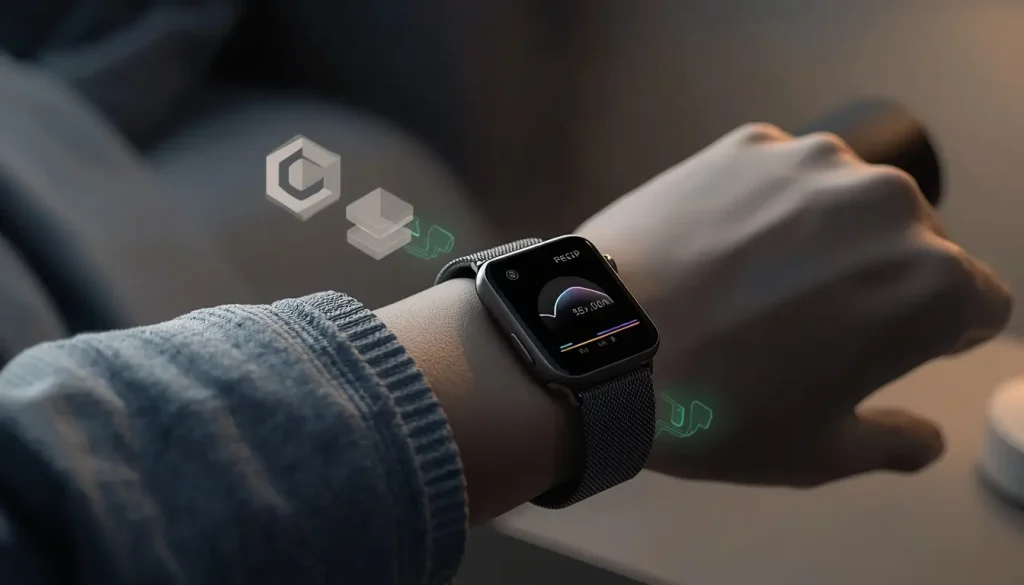
Wearable devices that improve sleep work by utilizing a combination of multi-axis accelerometers (actigraphy) to detect body movement and optical sensors photoplethysmography (PPG) to measure blood flow volume. By cross-referencing movement cessation with changes in heart rate and heart rate variability (HRV), algorithms estimate whether you are awake, in light sleep, deep sleep, or REM sleep.
Mechanism: Photoplethysmography (PPG) and Actigraphy:
To truly understand the utility of these devices, we must strip away the interface and look at the hardware. Most consumer-grade trackers rely on two primary sensor types that work in tandem to create a picture of your night:
- Actigraphy (Accelerometers): This was the original sleep tracking technology. It measures movement in 3D space. The premise is simple: when you are asleep, you are paralyzed (specifically during REM) or very still. When you are awake, you move. However, actigraphy alone is flawed if you lie perfectly still while awake (insomnia), the device might assume you are sleeping.
- Photoplethysmography (PPG): This is the green or red light you see flashing on the back of your smartwatch or ring. The sensor emits light into the skin and measures the amount of light reflected back. Blood absorbs light; therefore, the reflection patterns change with every pulse. This allows the device to calculate heart rate, HRV, and even respiration rate by detecting subtle modulations in pulse volume caused by breathing.
Why It Matters: The Proxy Problem:
It is critical to understand that wearable devices that improve sleep are not measuring sleep directly. “Sleep” is a neurological state defined by brain waves (EEG). Unless you are wearing a dedicated EEG headband, your device is measuring proxies for sleep.
It infers brain states from body states. For example, when your heart rate drops and your movement stops, the algorithm guesses you have entered a stable stage of sleep. When your heart rate variability (HRV) spikes and your respiration becomes irregular, it infers you are in REM sleep. This distinction is vital because while modern algorithms are impressive, they are biological estimates, not neurological facts. Relying on them as absolute medical truths can lead to confusion, whereas viewing them as directional data points empowers you to make lifestyle changes.
2. The Role of Biometric Data in Sleep Optimization:
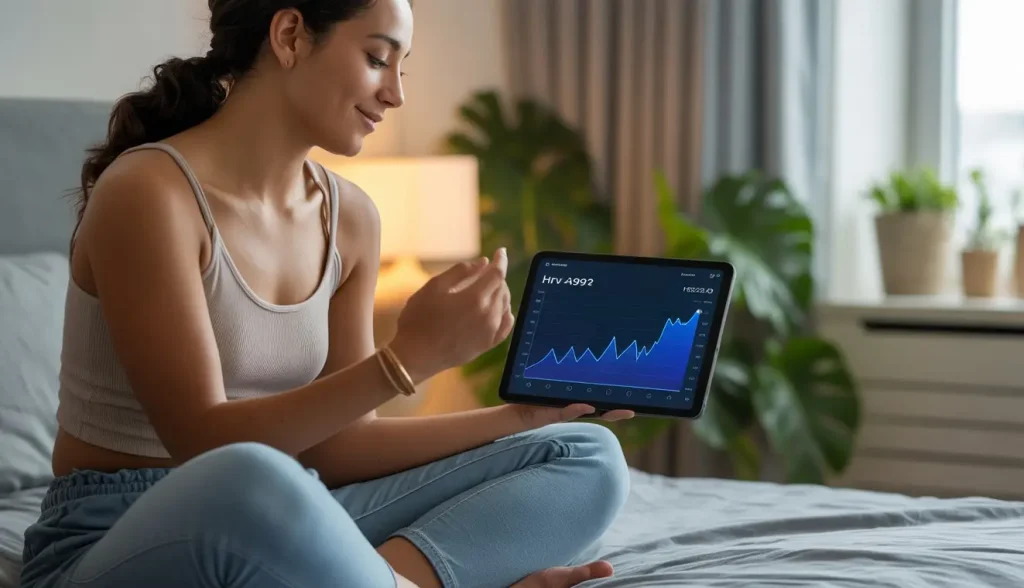
The most effective wearable devices that improve sleep do not just track duration; they monitor the Autonomic Nervous System (ANS) through Heart Rate Variability (HRV). This metric serves as a direct window into your body’s stress response, revealing how well your parasympathetic (rest-and-digest) system is functioning during the night.
Mechanism: Heart Rate Variability (HRV)
HRV is perhaps the most critical metric for biohackers and sleep enthusiasts. Unlike resting heart rate (which is just the number of beats per minute), HRV measures the variation in time (in milliseconds) between consecutive heartbeats.
A healthy heart does not beat like a metronome. It fluctuates based on inputs from your nervous system.
- Inhalation: When you breathe in, your heart rate speeds up slightly (sympathetic activation).
- Exhalation: When you breathe out, it slows down (parasympathetic activation).
wearable devices that improve sleep track this interplay. A high HRV indicates a responsive, flexible nervous system that is dominant in parasympathetic recovery. This is the goal during sleep it means your body is repairing tissue and restocking energy. Conversely, a low HRV indicates that the sympathetic nervous system (fight-or-flight) is still active. Your body is stressed, fighting an illness, or processing alcohol, preventing deep restorative sleep.
Why It Matters: The “Recovery” Score
Most devices aggregate this HRV data into a “Readiness” or “Recovery” score. This is biologically significant because it moves the conversation from “Did I sleep enough?” to “How well did I recover?”
If you sleep for 9 hours but your HRV remains low, it suggests that despite being unconscious, your body was not effectively repairing itself. This often happens after consuming alcohol, eating a heavy meal right before bed, or training too intensely late in the day. The data forces you to confront the biological reality that sedation is not the same as sleep. By monitoring HRV, you gain a dashboard for your internal stress load, allowing you to adjust your training or work intensity the following day.
3. Sleep Staging: Deep, Light, and REM Architecture:
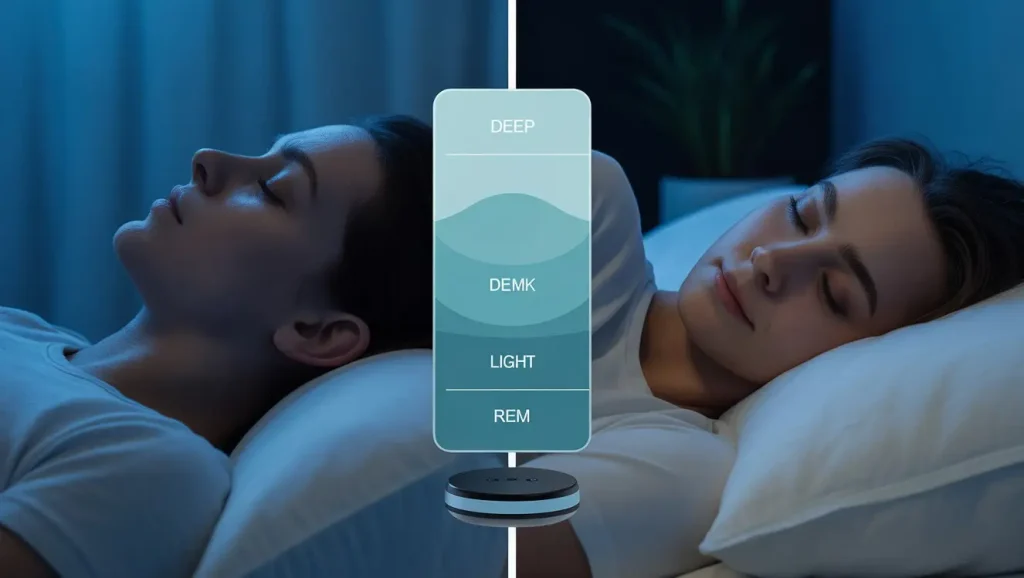
Advanced wearable devices that improve sleep attempt to break down your night into “Sleep Stages,” providing a hypnogram that visualizes your cycles of Light, Deep (Slow-Wave), and REM sleep. While not as accurate as clinical equipment, this breakdown helps users identify specific deficiencies in physical repair or cognitive processing.
Mechanism: Differentiating Stages:-
Sleep is not a monolith; it is a cycle of distinct physiological states, each serving a different purpose.
- Deep Sleep (NREM Stage 3): This is physically restorative. The brain flushes out toxins (via the glymphatic system), and the pituitary gland releases growth hormone. During this phase, your heart rate and breathing are at their lowest and most regular.
- REM Sleep (Rapid Eye Movement): This is mentally restorative. It is where emotional processing and memory consolidation occur. During REM, your brain is highly active, almost resembling wakefulness, and your heart rate becomes more variable.
Wearables attempt to distinguish these stages by looking for these specific physiological signatures. A sudden drop in heart rate combined with zero movement signals Deep Sleep. A rise in heart rate variability combined with paralysis signals REM.
Why It Matters: Targeted Optimization
Understanding your sleep architecture allows for targeted interventions.
- Low Deep Sleep? This often correlates with a room that is too warm, late caffeine intake, or a lack of physical fatigue during the day.
- Low REM Sleep? This is frequently caused by alcohol (which suppresses REM), cannabis use, or high psychological stress levels.
By using wearable devices that improve sleep to identify which specific stage you are missing, you can tailor your behavioral changes. Instead of just “trying to sleep better,” you can say, “I need to cool down my room to boost Deep Sleep,” or “I need to cut alcohol to reclaim my REM.” This turns sleep hygiene from a guessing game into a precision protocol.
4. The Accuracy Gap: Consumer Tech vs. Clinical Science:
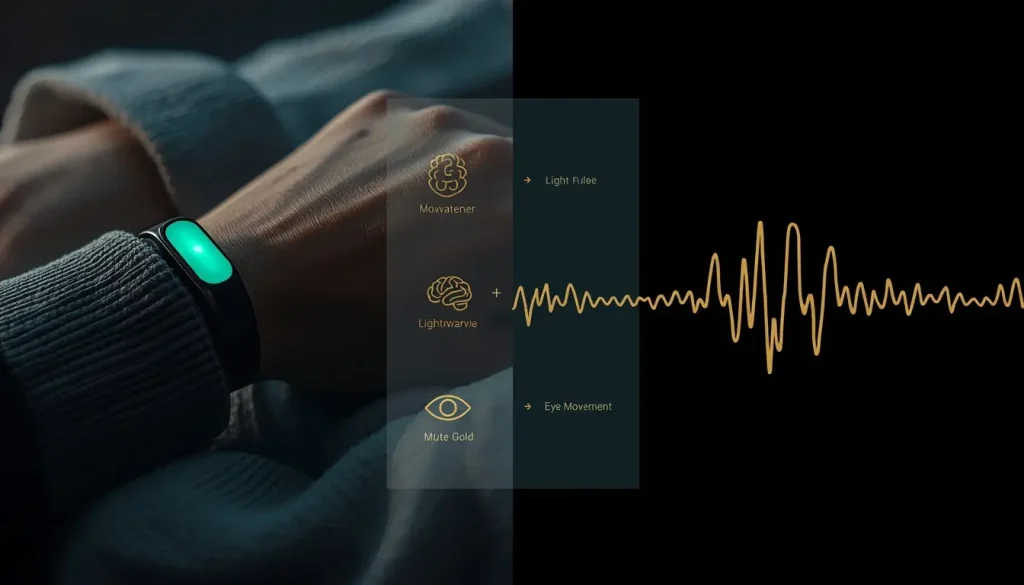
While wearable devices that improve sleep have advanced significantly, they remain “consumer-grade” technology. Studies comparing these devices to clinical polysomnography (PSG) show high accuracy for total sleep time but lower reliability for distinguishing between sleep stages, often misclassifying wakefulness as sleep.
Mechanism: The Gold Standard (PSG)
Clinical Polysomnography (PSG) involves sticking electrodes to your scalp to measure electrical brain activity (EEG), muscle tension (EMG), and eye movement (EOG). This is the only way to truly know if a brain is asleep or awake, or what stage it is in.
The American Academy of Sleep Medicine explains that clinical polysomnography (PSG) remains the gold standard for evaluating sleep architecture, as it directly measures brain waves, eye movement, and muscle tone. Consumer wearable devices, while useful for long-term trend tracking, are not designed to diagnose sleep disorders and should be viewed as behavioral guidance tools rather than clinical instruments.
Consumer wearables do not measure brain waves (with rare exceptions like EEG headbands). They use algorithms to guess brain waves based on the wrist’s pulse.
Educational Table: Wearables vs. Clinical PSG
| Feature | Consumer Wearable (Wrist/Ring) | Clinical Polysomnography (PSG) |
| Primary Data Source | Movement (Actigraphy) & Blood Flow photoplethysmography(PPG) | Brain Waves (EEG), Eye Movement (EOG), Muscle Tone (EMG) |
| Sleep/Wake Accuracy | High (~90%) | Gold Standard (100%) |
| Stage Accuracy (REM/Deep) | Moderate (~60-75%) | Gold Standard (100%) |
| Latency Detection | Can struggle with “quiet wakefulness” | Precise detection of sleep onset |
| Main Utility | Long-term behavioral trends | Diagnosing medical disorders (Apnea, Narcolepsy) |
Why It Matters: Managing Expectations
According to research cited by the Sleep Foundation and validated by various independent studies, the best consumer trackers have about a 70-80% agreement with PSG for sleep staging.
- The “Wake” Problem: Wearables often struggle to detect “quiet wakefulness.” If you wake up at 3:00 AM and lie perfectly still worrying about work, your tracker might log that as “Light Sleep” because your heart rate is low and you aren’t moving.
- The Takeaway: Treat the data as a trend line, not an absolute truth. If your device says you got 1 hour of Deep Sleep, it might actually be 45 minutes or 75 minutes. But if it consistently drops to 10 minutes over a week, that is a reliable trend worth addressing.
5. The Feedback Loop: Behavioral Change via Data:
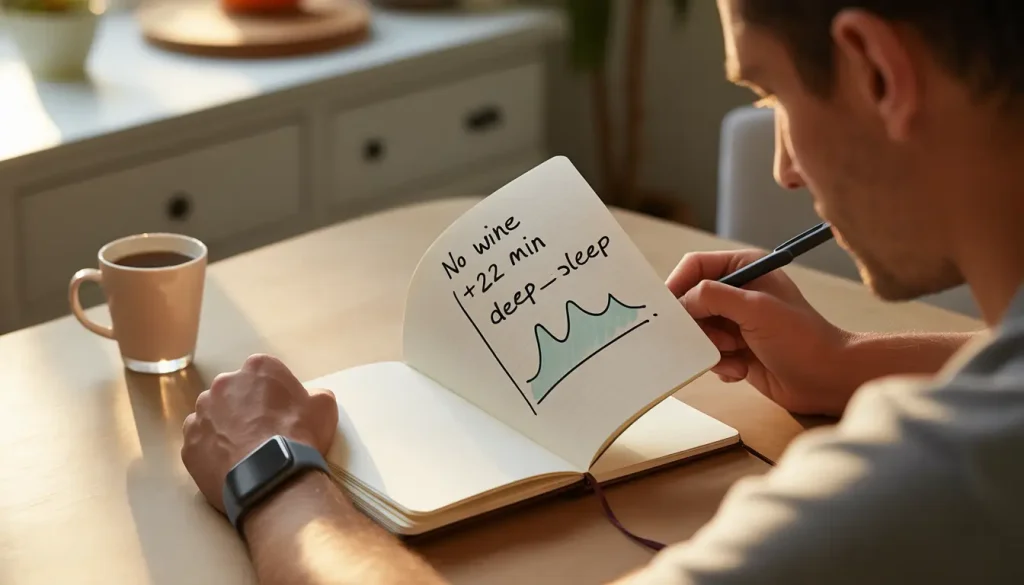
The primary utility of wearable devices that improve sleep is the creation of a biofeedback loop. By correlating daytime behaviors such as caffeine timing, exercise intensity, and light exposure with objective sleep data, users can identify their unique biological triggers and modify their lifestyle for improved outcomes.
Raw sleep data is only useful when it is interpreted correctly. Many people see trends in their wearable data but struggle to understand what those patterns actually mean for their biology. To bridge this gap, tools like the AI Sleep Lab help translate sleep metrics such as HRV, sleep duration, and recovery trends into practical insights. Instead of guessing which habit is harming your sleep, structured analysis allows you to connect wearable data with actionable behavioral adjustments.
Mechanism: The Associative Learning Process
Humans are notoriously bad at judging the quality of their own sleep. We often confuse “passing out quickly” with good sleep, when it might actually indicate exhaustion or sleep deprivation. Wearables provide an objective third-party assessment that bridges the gap between feeling and physiology.
This creates a powerful psychological mechanism known as associative learning.
- Action: You drink a glass of wine at 9:00 PM.
- Result: Your wearable shows your resting heart rate remained elevated for the first four hours of sleep and your sleep score tanked.
- Learning: “Wine hurts my sleep.”
Without the data, you might just feel groggy and blame the weather or your mattress. The data isolates the variable.
Why It Matters: Personalizing Hygiene:
General sleep hygiene advice (e.g., “don’t drink coffee after noon”) is useful, but individual biology varies. Some people are fast metabolizers of caffeine (CYP1A2 gene); others are slow. Wearable devices that improve sleep allow you to run n=1 experiments on yourself. You might discover that you can handle caffeine until 2:00 PM, but late-night snacking destroys your HRV. This personalized insight is far more valuable than generic advice because it is based on your autonomic nervous system’s response.
The Dark Side: Understanding Orthosomnia:
An emerging psychological phenomenon linked to wearable devices that improve sleep is “orthosomnia” a condition where the obsessive pursuit of “perfect” sleep data creates anxiety that ironically causes insomnia. Users must navigate the fine line between helpful monitoring and detrimental fixation.
Mechanism: The Nocebo Effect:
The “nocebo effect” occurs when negative expectations cause negative outcomes. In the context of sleep tracking, this happens when you wake up feeling okay, check your app, see a “Sleep Score: 50,” and immediately feel exhausted. The data overrides your subjective experience.
This performance anxiety can spike cortisol levels at night. As you lie in bed trying to drift off, you might think, “If I don’t fall asleep in the next 10 minutes, my graph will look terrible tomorrow.” This thought process engages the sympathetic nervous system, making sleep physically impossible.
Why It Matters: Healthy Relationships with Data:
To use wearable devices that improve sleep safely, you must detach your self-worth from the number.
- Rule of Thumb: If checking your data causes your heart rate to spike, take a break.
- Best Practice: Many experts recommend checking sleep data later in the day (e.g., at lunch) rather than immediately upon waking. This allows your body to wake up naturally without the immediate judgment of an algorithm.
Tools & Resources: wearable devices that improve sleep
When building a sleep optimization protocol, the focus should be on behavioral tools and environmental control rather than just purchasing hardware. The wearable is the measurement, but these are the levers you pull to change the result.
Conceptual Tools:
- The 3-2-1 Rule: A behavioral framework to improve data scores. Stop eating 3 hours before bed, stop drinking fluids 2 hours before bed, and stop screens 1 hour before bed.
- Chronotype Assessment: Understanding if you are a “morning lark” or “night owl” helps you interpret your sleep timing data correctly. If you are a night owl, forcing a 9 PM bedtime will result in “sleep latency” issues on your tracker.
Behavioral Protocols:
Temperature Manipulation: Using warm baths (to trigger a body temp drop) or cooling mattress pads can directly influence the “Deep Sleep” metric on wearable devices that improve sleep.
Morning Sunlight Anchoring: Viewing sunlight within 30 minutes of waking sets the circadian timer. This is the single most effective behavior for improving “Sleep Onset Latency” metrics on your device.
REAL HUMAN STORIES:
The “High-Performer” Crash:Mark, a 34-year-old software architect, prided himself on needing only five hours of sleep. He felt “fine” and relied on caffeine to power through coding sprints. After purchasing a wrist-based sleep tracker, he was shocked to see his HRV was consistently in the 20ms range extremely low for his age and his Deep Sleep averaged less than 15 minutes per night.
The visual proof that his body was in a state of chronic physiological stress broke through his denial. He didn’t change everything at once. He simply started wearing blue-light blocking glasses at 8:00 PM. Within two weeks, his tracker showed his Deep Sleep had doubled to 30 minutes. The data didn’t fix his sleep; it gave him the objective permission to prioritize it.
The “Anxious Tracker” Correction:Maria, a 29-year-old teacher, developed insomnia after buying a sleep tracker. She became obsessed with getting a “100” sleep score. Every night, she would check the device if she woke up, which blasted her eyes with light and spiked her anxiety.
She realized she was suffering from orthosomnia. Her solution wasn’t to throw the device away, but to change her relationship with it. She taped over the screen so she couldn’t see it at night and delegated the data review to a weekly “audit” on Sunday mornings only. By removing the daily judgment, her cortisol lowered, and ironically, her sleep scores improved.
Frequently Asked Questions (FAQ):
Q: Can wearable devices that improve sleep detect sleep apnea?
A: Some advanced wearables can detect variations in blood oxygen (SpO2) and breathing irregularities that suggest sleep apnea, but they cannot diagnose it. If your device consistently shows oxygen drops below 90% or high variations in breathing, you should consult a doctor for a clinical sleep study.
Q: Should I wear my tracker tight or loose?
A: For the most accurate photoplethysmography(PPG) readings, the sensor must remain flush against the skin without being constricting. If it is too loose, external light leaks in and corrupts the data. If it is too tight, it can restrict blood flow and alter the pulse signal.
Q: Why does my tracker say I am awake when I am sleeping?
A: This is usually a failure of actigraphy. If you are a restless sleeper who tosses and turns, the accelerometer detects motion and interprets it as wakefulness. Conversely, if you lie very still but are awake, it may log it as sleep.
Q: Do these devices emit harmful radiation?
A: Most wearables use Bluetooth Low Energy (BLE) technology, which emits significantly less non-ionizing radiation than a smartphone. For those concerned, many devices offer an “Airplane Mode” that stores data locally on the device and only syncs when you manually turn it back on in the morning.
Q: How accurate are the “Calories Burned” during sleep?
A: They are estimates based on your Basal Metabolic Rate (BMR) and heart rate. While useful for general trends, they should not be treated as exact caloric math. Sleep is not a high-burn activity; the focus should remain on recovery metrics like HRV.
Final Verdict:
Wearable devices that improve sleep are powerful tools for demystifying human biology. They transform vague feelings of fatigue into concrete, actionable data points like Heart Rate Variability and Sleep Stages. By providing a feedback loop, they allow you to test how lifestyle choices from diet to light exposure physiologically impact your recovery.
However, they are not magic wands. A tracker cannot sleep for you. Its value lies entirely in your willingness to interpret the data without obsession and adjust your behaviors accordingly. Used correctly, they are the ultimate accountability partner for your Autonomic Nervous System.
Save this wearable devices that improve sleep guide to interpret your sleep data accurately.