


How to Manage Screen Time Using Science-Backed Techniques
Key Takeaways:
- Counter-intuitive Insight: Reducing screen time isn’t about “willpower”; it is about designing your environment to reduce dopamine triggers.
- Specific Number: Research suggests that screen time exceeding 4 hours per day is linked to a significantly higher risk of anxiety and depressive symptoms.
- Simple Habit: Switching your phone display to Grayscale Mode can immediately lower the neurochemical reward of checking notifications.
- Realistic Expectation: It takes approximately 3 to 7 days of consistent circadian realignment (managing light exposure) to feel a noticeable difference in sleep quality.
Do you ever feel a “phantom vibration” in your pocket, or find yourself unlocking your phone without any conscious intention to do so? You are not alone, and it is not a flaw in your character. In our hyper-connected era, the average adult spends a massive portion of their waking life interacting with digital interfaces. While this connectivity offers convenience, the biological cost is steep. This is not merely about distraction; it is about how sustained digital input physically alters your neurochemistry and disrupts your biological rhythms.
Excessive screen exposure triggers a continuous loop of dopamine-seeking behavior while simultaneously spiking cortisol, keeping your body in a subtle but persistent state of “fight or flight.” A study published by the National Institutes of Health (NIH) highlights that excessive screen time is strongly correlated with increased rates of anxiety, depression, and significant sleep disruption. The blue light from your devices tricks your brain into believing it is eternal noon, shattering the delicate hormonal balance required for restoration.
This guide will not suggest you delete every app or throw away your smartphone. Instead, we will explore authoritative, biology-based screen time management techniques designed to work with your physiology. By understanding the mechanisms of dopamine and light, you can reclaim your cognitive focus and reset your sleep cycles naturally.
While researching screen time management for Digital Zen, I tested multiple techniques personally including grayscale mode, notification batching, and strict bedroom screen bans over several weeks. The most effective changes were not extreme detoxes, but small environmental rules that reduced friction between impulse and action. The insights in this guide combine biological research with observed behavioral outcomes.
1. What Are the Biological Impacts of Screen Overload?

What happens is that screens hyper-stimulate the brain’s reward center while taxing its processing power. Why this matters is because it creates a “compulsion loop” driven by dopamine and “directed attention fatigue” driven by cortisol. How you manage this involves recognizing these biological signals like irritability or eye twitching as warnings to disengage immediately.
The Dopamine Feedback Loop:
Every notification, like, or infinite scroll acts as a micro-reward for your brain. This activates the ventral tegmental area (VTA), flooding neural pathways with dopamine. Evolutionarily, this system helped humans seek food and social connection. Today, app developers leverage this mechanism to keep you engaged. Chronic overstimulation of these pathways can lead to “dopamine downregulation,” a process where the brain reduces its receptor sensitivity to maintain balance. The result is that everyday non-digital activities like reading a book or walking begin to feel paradoxically “boring” or unstimulating because they cannot match the high-speed chemical reward of the screen.
Reference: The neuroscience behind reward-seeking and compulsive behavior is well explained by the National Institute on Drug Abuse (NIDA), which outlines how dopamine-driven reinforcement loops shape habits over time.
Cortisol and Directed Attention Fatigue:
Beyond pleasure, there is stress. The constant need to filter information, switch contexts, and process rapid visual changes causes what psychologists call “directed attention fatigue.” This cognitive load triggers the release of cortisol, the body’s primary stress hormone. Elevated cortisol levels can lead to a state of hyper-arousal, making it physically difficult to relax even after you have put the device away. Understanding that your “tech addiction” is actually a physiological stress response is the first step toward effective management.
If you want a deeper neuroscience-based breakdown of reducing cognitive load and digital overstimulation, read our guide on simplifying your digital life.
2. How Does the 20-20-20 Rule Prevent Digital Eye Strain?

What the 20-20-20 rule is, is a visual pacing technique designed to reduce optical fatigue. Why it is necessary is because staring at a fixed distance causes the ciliary muscles in the eye to spasm, leading to Computer Vision Syndrome. How to execute it is simple: Every 20 minutes, look at an object 20 feet away for 20 seconds.
The Mechanism of Ciliary Muscle Spasm:
One of the most immediate physical side effects of screen use is Digital Eye Strain (DES). When you focus on a close-up, pixelated screen, the ciliary muscles in your eyes must contract to maintain that focal point. Holding this contraction for hours is akin to holding a bicep curl without releasing it eventually, the muscle fails. Additionally, studies cited by the Mayo Clinic indicate that humans blink significantly less often when staring at screens dropping from a normal 15-20 blinks per minute to as few as 5-7. This lack of lubrication leads to dry, irritated corneas and visual fatigue that can trigger tension headaches.
Implementing Visual Breaks Correctly:
To break this cycle of strain, the 20-20-20 protocol is the gold standard in visual ergonomics.
- The Trigger: Set a silent timer or use a desktop app to nudge you every 20 minutes.
- The Action: Shift your gaze to a non-digital object at least 20 feet away. This specific distance is crucial because, at 20 feet, the eye’s lens flattens and the ciliary muscles fully relax (a state called “infinity focus”).
- The Duration: It takes approximately 20 seconds for the muscles to fully un-clench and for tear film to replenish. Combining this with conscious blinking exercises can significantly reduce the physical toll of a workday spent in front of a monitor.
3. Why You Should Establish “Tech-Free Zones” in Your Home

What a Tech-Free Zone is, is a designated physical space where digital devices are strictly prohibited. Why this works is based on “environmental conditioning” your brain maps specific behaviors to specific locations. How to implement it involves physically removing chargers and devices from restorative areas like the bedroom and dining table.
Environmental Cues and Sleep Hygiene
Willpower is a finite resource; environmental design is permanent. Cognitive science suggests that our brains are pattern-matching machines. If you habitually scroll through social media in bed, your brain wires the bedroom as a place of alertness, entertainment, and dopamine release rather than rest. This makes falling asleep physiologically more difficult, even if you are tired. One of the most powerful screen time habits is to create physical boundaries where screens are simply not allowed, forcing the brain to decouple that space from digital stimulation.
This strategy fits naturally into a digital minimalism lifestyle, where technology supports your life instead of constantly interrupting it.
The Bedroom and Dining Table Protocol
To break the association between specific rooms and digital consumption, implement strict “No-Tech Zones”:
- The Dining Table: Eating while distracted disrupts satiety signals (the hormone leptin), potentially leading to overeating and poor digestion. Keeping this zone tech-free promotes mindful eating and allows the parasympathetic nervous system (“rest and digest”) to function correctly.
- The Bedroom: Removing devices from the bedroom is the single most effective intervention for sleep hygiene. By leaving your phone in the kitchen or hallway to charge overnight, you physically prevent the “doom-scrolling” loop that delays sleep onset. This creates a friction barrier having to walk to another room to check a notification is often enough to stop the habit before it starts.
4. How to Use Grayscale and Batching to Lower Dopamine
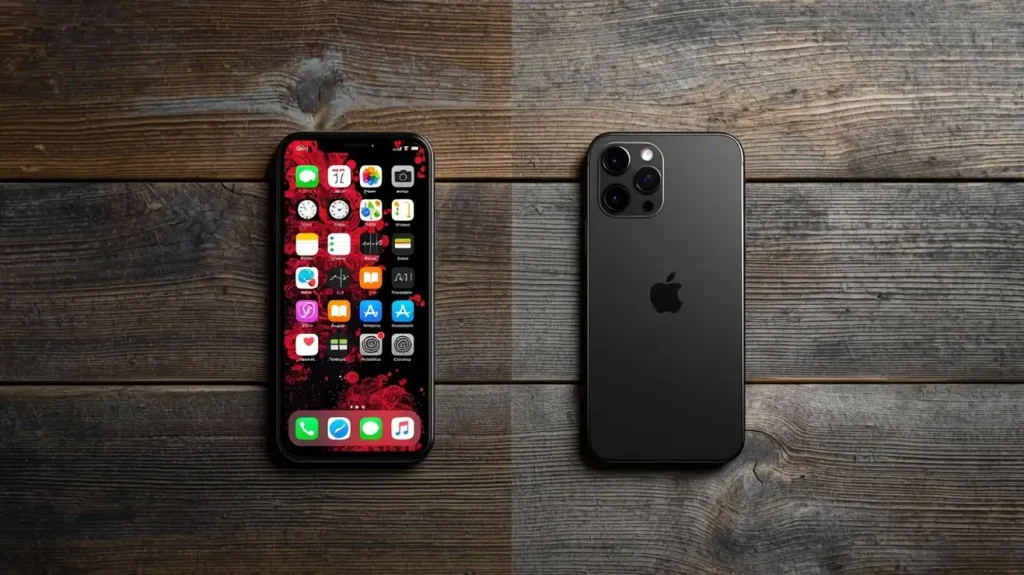
What these techniques are involves modifying the phone’s interface and delivery systems to be less stimulating. Why they are effective is because they reduce the “salience” (visual attractiveness) and unpredictability of rewards. How to use them is by switching your display to black-and-white and scheduling notifications to arrive only at set intervals.
Reducing Visual Salience (Grayscale)
App icons are colorful for a reason. Bright red notification bubbles and vibrant user interfaces are designed to capture visual attention, a concept known as “salience.” A highly effective biohacking technique is to turn your phone’s display to Grayscale (black and white) via the accessibility settings. Without the vibrant colors stimulating your visual cortex, the phone becomes a utilitarian tool rather than a source of entertainment. It lowers the immediate dopamine “hit” you get from unlocking the screen, making the experience less gratifying and easier to end.
This is one of the simplest ways to reduce compulsive scrolling without relying on willpower similar to the approach explained in our full guide on how to simplify digital life.
The Biology of Notification Batching
“Continuous partial attention” occurs when we constantly check messages as they arrive. This fragments our focus and prevents deep cognitive work. Instead, use “batching.” Configure your device to deliver non-urgent notifications only at specific times (e.g., 9:00 AM, 1:00 PM, 5:00 PM). This predictability allows your brain to enter “flow states” periods of deep, uninterrupted focus which are crucial for cognitive satisfaction and reducing the cortisol spikes associated with constant multitasking.
5. What Is the Connection Between Blue Light and Circadian Rhythms?
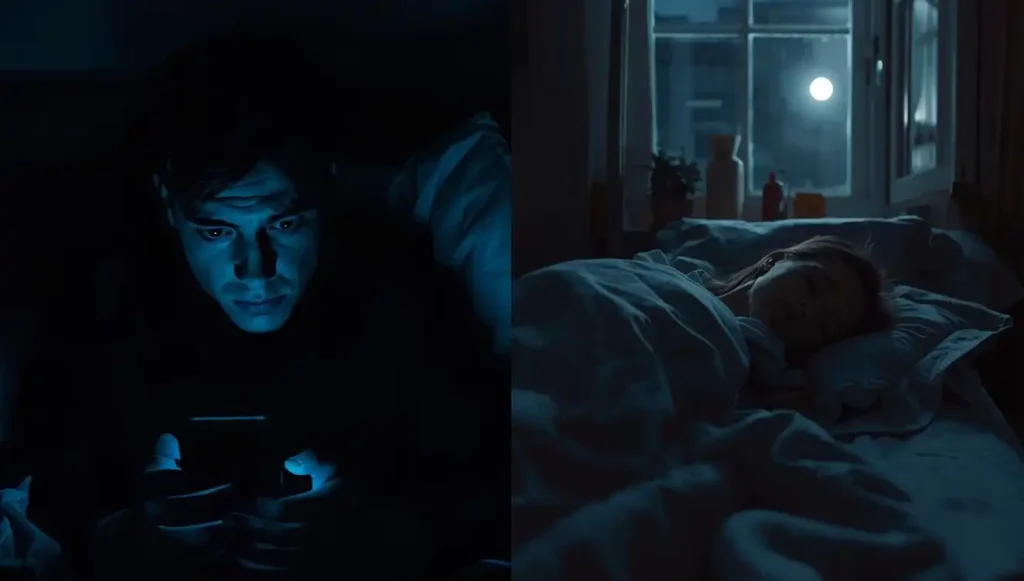
What this connection entails is the sensitivity of the eyes to short-wavelength light. Why it is critical is because blue light suppresses melatonin, the hormone that signals the body it is time to sleep. How to manage it involves using blue-light blocking tools and stopping screen use strictly 60 minutes before bed.
Melatonin Suppression Mechanisms
Your circadian rhythm the internal clock that regulates sleep and wakefulness is calibrated by light. Specifically, intrinsically photosensitive retinal ganglion cells (ipRGCs) in your eyes are highly sensitive to short-wavelength “blue” light (~460nm). When these cells detect blue light, they signal the suprachiasmatic nucleus (SCN) in the brain to halt melatonin production. Using a screen late at night tells your body it is essentially “noon.” This shifts your circadian phase, making it harder to fall asleep and harder to wake up the next morning.
When these cells detect blue light, they signal the suprachiasmatic nucleus (SCN) in the brain to halt melatonin production.
The Sunset Protocol and Light Buffers
To protect your sleep biology, you must actively manage light intake as the day progresses:
- The Sunset Protocol: Use software tools (like Night Shift, f.lux, or Android’s Night Mode) that automatically warm the color temperature of your screen as the sun sets. This reduces the intensity of the blue spectrum, though it does not eliminate it entirely.
- The 60-Minute Buffer: The Sleep Foundation recommends ceasing all screen interaction at least 60 minutes before bed. This “digital twilight” allows melatonin levels to rise naturally, facilitating a faster transition into the restorative stages of deep sleep and REM cycles.
6. How to Implement a Digital Detox for Receptor Reset

What a digital detox is, is a structured period of complete abstinence from digital devices. Why it matters is because it allows downregulated dopamine receptors to recover their sensitivity. How to do it ranges from “intermittent digital fasting” (12 hours daily) to longer 24-hour resets.
Understanding Dopamine Downregulation
Just as our digestive systems need a break from food, our neural pathways benefit from a break from stimulation. When you bombard your brain with high-dopamine digital inputs all day, your brain adapts by reducing the number of dopamine receptors. This is why you feel “numb” or bored when not on your phone. A detox period removes this super-stimulus, forcing the brain to upregulate (regrow/sensitize) these receptors.
Structuring Short-Term vs. Long-Term Fasts
A “digital detox” does not require abandoning technology forever. It can be structured like intermittent fasting:
- The 12-Hour Fast: Implementing a rule where you are screen-free from 8:00 PM to 8:00 AM gives your brain a predictable period of rest and recovery every single day.
- Screen-Free Saturdays: Extended breaks, such as a full 24 hours offline, allow for a deeper reset. During these periods, you may initially feel boredom or restlessness this is effectively withdrawal. However, pushing through this discomfort allows you to eventually find enjoyment in slower, analog activities like reading, cooking, or face-to-face conversation.
The Relationship Between Light Exposure and Sleep Quality
This table compares how different types of light exposure affect your circadian biology.
| Light Source | Wavelength Characteristic | Biological Effect | Best Time for Exposure |
| Natural Sunlight | Full spectrum (high intensity) | Triggers serotonin; aligns circadian clock | Morning (6:00 AM – 10:00 AM) |
| Standard LED Screen | High blue-light spike (~460nm) | Suppresses melatonin; increases alertness | Daytime Work Hours Only |
| Warm/Amber Light | Long wavelength (low blue) | Minimal melatonin suppression; relaxing | Evening (Post-Sunset) |
| Red Light | Longest visible wavelength | No impact on circadian rhythm | Late Night / Pre-Sleep |
Practical Tools to Reduce Screen-Related Strain
Effective digital wellbeing tools function by creating “friction” against bad habits or by mimicking natural sensory inputs. They are designed to lower the cognitive load on your prefrontal cortex and reduce the dopamine spikes that drive compulsive scrolling. By swapping high-stimulation devices for low-stimulation alternatives, you physically alter how your brain processes information and rest.
The Single-Function Analog Alarm Clock
The Concept: This is the foundational tool for sleep hygiene. In a world of multi-purpose devices, a single-purpose tool is a luxury for your brain.
The Biological Mechanism: Using a smartphone as an alarm creates a “Pavlovian” association: the device that wakes you up is the same device that delivers stress (work emails) and dopamine (social media). If your phone is your alarm, it must be within arm’s reach. This proximity triggers a low-level state of alertness (hyper-arousal) because your brain anticipates potential notifications.
- The Deep Benefit: An analog clock breaks this dependency. It allows you to charge your phone in another room (the Kitchen or Hallway). This physical separation eliminates the “checking time → checking email” loop, protecting your cortisol levels immediately upon waking and right before sleep.
2. Reflective “E-Ink” Displays (vs. Emissive LEDs)
The Concept: Not all screens are created equal. Tablets and smartphones use “emissive” displays (shining light into your eyes). E-ink devices (like dedicated readers) use “reflective” technology (reflecting ambient light like paper).
The Biological Mechanism: Emissive LED screens flicker at high frequencies (Pulse Width Modulation) which, although invisible to the naked eye, taxes the visual cortex and contributes to headaches. Furthermore, the direct light source suppresses the blinking reflex.
- The Deep Benefit: E-Ink technology contains no backlight (or allows you to turn it off completely). It mimics the visual properties of paper, requiring an external light source to be seen. This encourages the eye to relax and blink naturally, bypassing the “blue light” melatonin suppression pathway entirely if used with a warm lamp.
3. Gamification Timers (The “Dopamine Swap”)
The Concept: Behavioral tools that visualize “focus time” as a game—for example, growing a virtual tree or building a structure while the phone is locked.
The Psychological Mechanism: The human brain craves immediate feedback. “Focusing” feels abstract and unrewarding in the short term, whereas “scrolling” offers immediate visual rewards. Gamification concepts hack this reward loop.
- The Deep Benefit: By offering a visual representation of your time (e.g., “If I don’t touch my phone for 30 minutes, this virtual tree grows; if I touch it, the tree dies”), you utilize the psychological principle of “Loss Aversion.” We are biologically wired to avoid losing progress. This replaces the cheap dopamine of a notification with the more sustainable dopamine of “achievement,” making it chemically easier to resist distraction.
4. Amber/Red Spectral Filters (Blue Light Blockers)
The Concept: Non-prescription eyewear with specific amber or deep orange tints, worn 1–2 hours before bed.
The Biological Mechanism: Most “computer glasses” are clear and only block UV light or a tiny fraction of blue light. However, the specific wavelength that suppresses melatonin is between 460nm and 480nm. Clear lenses cannot block this range effectively.
- The Deep Benefit: Amber or red-tinted lenses physically filter out nearly 100% of light in the 400–500nm spectrum. When you wear these, your eyes can still “see,” but the melanopsin receptors in your retina (ipRGCs) stop receiving the “daytime” signal. This allows your pineal gland to secrete melatonin even if you are looking at a screen or sitting in a lit room, preserving your circadian rhythm.
5. Physical “Phone Jails” or Lock Boxes
The Concept: A container with a time-lock mechanism that physically prevents access to the device for a set period.
The Psychological Mechanism: This tool outsources “willpower.” Willpower causes decision fatigue; every time you look at your phone and decide not to pick it up, you burn cognitive energy.
- The Deep Benefit: By physically locking the device away, you remove the option of using it. Once the brain realizes the reward is inaccessible, the dopamine craving creates a phenomenon called “extinction.” The urge to check the phone disappears much faster because the brain knows the action (checking) is impossible, freeing up that mental energy for deep work or relaxation.
Real Human Stories: Resetting the Digital Balance:
Case Study 1: The Grayscale Experiment Sarah, a 34-year-old graphic designer, found herself unconsciously unlocking her phone dozens of times an hour, disrupting her creative flow. She decided to implement the “Grayscale” technique. “It was jarring at first,” she noted. “Instagram looked like a newspaper. It was boring.” That boredom was the point. Within three days, her screen time dropped by 45 minutes a day. By removing the colorful reward stimulus, her brain no longer craved the device, allowing her to finish her design projects with sustained focus she hadn’t felt in years.
Case Study 2: The Bedroom Ban Mark, a 42-year-old software engineer, suffered from chronic insomnia. He routinely checked emails until the moment he closed his eyes. After reading about blue light’s impact on melatonin, he bought a simple analog alarm clock and left his phone in the kitchen overnight. “The first two nights were hard; I felt disconnected,” he admitted. But by day five, he was falling asleep within 15 minutes. The physical separation didn’t just remove the light; it removed the psychological weight of work, signaling to his body that the bedroom was strictly for rest.
(Note: Names and identifying details have been adjusted to preserve privacy while maintaining biological accuracy)
Frequently Asked Questions (FAQ):
Q: Is “Dark Mode” better for my eyes than standard mode?
A: Dark mode can reduce overall brightness and glare in low-light environments, potentially reducing eye strain. However, it does not eliminate blue light exposure or the cognitive stimulation of the content you are consuming.
Q: How much screen time is considered “too much” for an adult?
A: While individual needs vary, studies suggest that recreational screen time exceeding 4 hours per day is linked to lower psychological well-being. The quality of screen time (passive scrolling vs. active learning) also matters.
For a long-term approach, you can also explore our guide on building a digital minimalism lifestyle to reduce screen overload sustainably.
Q: Do blue light glasses actually work?
A: Research is mixed regarding eye strain, but amber/orange-tinted glasses are effective at blocking the specific wavelengths of light that suppress melatonin. They are most useful when worn 1-2 hours before bed to protect sleep cycles.
Q: Can screen time cause permanent eye damage?
A: According to the American Academy of Ophthalmology, there is no evidence that screen use causes permanent damage to the eye’s physical structure. However, it causes temporary but painful digital eye strain and dry eye, which can impact daily quality of life.
Q: Why do I feel tired but wired after being on my phone?
A: This “tired but wired” sensation is often due to high cortisol levels (stress) combined with mental fatigue. Your brain is exhausted from processing information, but your nervous system is agitated, making relaxation difficult.
Final Verdict:
Managing your digital life is not about rejecting technology; it is about understanding your own biology. By recognizing how screens trigger dopamine loops and disrupt circadian rhythms, you can implement effective screen time management techniques to regain control. Whether it is using the 20-20-20 rule for eye health or establishing a strict “No-Tech Zone” in the bedroom for better sleep, small, consistency-based changes yield the biggest results.
Start with one change today: set a 60-minute screen-free buffer before sleep. Small, consistent boundaries create the biggest long-term shift in digital balance.