

How to Fall Asleep Faster Naturally: A Science-Backed Guide
Key Takeaways:
- The Paradox: Trying harder to sleep actually activates the brain’s alertness centers, pushing sleep further away.
- The 10-3-2-1 Rule: A structured timeline for caffeine, food, work, and screens that prepares your body hours before bed.
- Temperature Drop: Your core body temperature must drop by about 2-3 degrees Fahrenheit to initiate sleep onset.
- Consistency: It takes roughly 3 to 4 days of consistent wake-times to reset a drifted circadian rhythm
It is a familiar, frustrating scenario: you are exhausted physically, yet the moment your head hits the pillow, your mind begins to race. You stare at the ceiling, calculating how many hours of rest you will get if you drift off right now. This anxiety creates a feedback loop that makes it biologically impossible to power down. In a world driven by artificial light and high-stress demands, our natural biological cues for rest have become scrambled.
Understanding the biology behind sleep onset is the first step to reclaiming your nights. It is not about forcing your brain to shut off; it is about creating the specific physiological conditions lowered temperature, reduced cortisol, and adenosine buildup that allow sleep to happen automatically. By aligning your evening routine with your body’s internal clock, you can reduce sleep latency (the time it takes to fall asleep) without relying on external aids. This guide explores how to fall asleep faster naturally by leveraging the science of your own nervous system.
According to the National Institutes of Health (NIH), roughly 30% of adults experience occasional insomnia or difficulty initiating sleep. However, by understanding the mechanics of the “sleep switch,” you can transition from wakefulness to rest with greater ease.
1.Understanding the Biology of Sleep Onset:
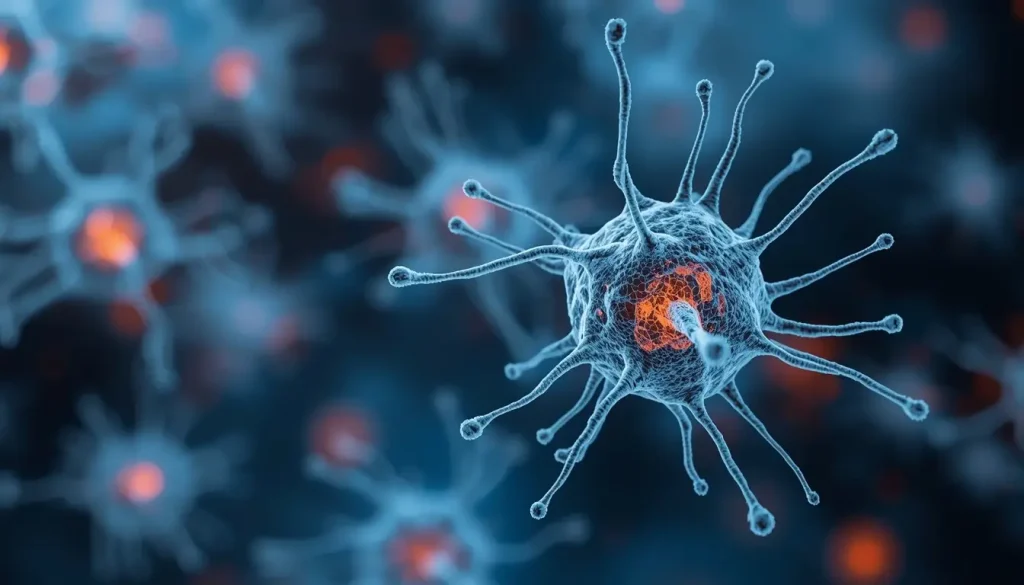
To fall asleep faster naturally, your body must transition from the sympathetic nervous system (fight or flight) to the parasympathetic nervous system (rest and digest). This biological shift requires a drop in core body temperature, the release of melatonin triggered by darkness, and sufficient “sleep pressure” caused by the buildup of a chemical called adenosine throughout the day.
The Role of Adenosine and Circadian Rhythms
Sleep is governed by two main processes: the circadian rhythm and the homeostatic sleep drive. The circadian rhythm is your internal 24-hour clock, primarily regulated by light exposure. It tells your body when to be alert and when to release hormones like melatonin to induce sleepiness.
Simultaneously, a chemical called adenosine builds up in your brain while you are awake. Think of adenosine as a “sleep hunger.” The longer you are awake, the more pressure builds up. When you fall asleep faster naturally, it is usually because these two systems high sleep pressure and the correct circadian alignment peak at the exact same time.
However, modern lifestyle factors often disrupt this synchronization. High cortisol levels from stress can override adenosine pressure, keeping you “wired but tired.” By understanding this, you can stop fighting your brain and start signaling safety to your nervous system
2.Leveraging Light to Fall Asleep Faster Naturally:

Light is the single most powerful external cue for regulating your sleep-wake cycle.
Morning Light vs. Evening Darkness
Your body’s master clock, the Suprachiasmatic Nucleus (SCN), is located in the hypothalamus and is directly sensitive to light entering the eyes. To prepare your body to sleep tonight, you actually need to start this morning. Viewing bright sunlight within 30-60 minutes of waking triggers a cortisol pulse that sets your timer for the day. This early signal helps ensure that melatonin production will begin roughly 12-14 hours later.
Conversely, in the evening, you must protect your eyes from blue light. Blue wavelengths (emitted by phones, LEDs, and TVs) suppress melatonin production more than any other light spectrum. To fall asleep faster naturally, mimic the sunset environment in your home.
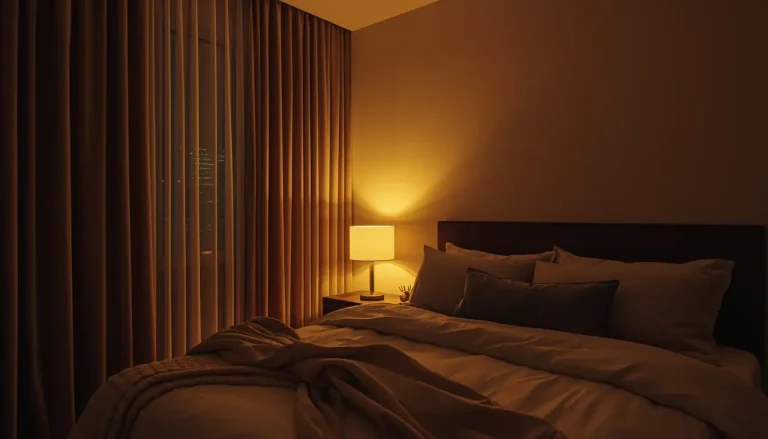
- Dim the lights: Two hours before bed, turn off overhead lights and switch to floor lamps.
- Shift the spectrum: Use amber or red-hued bulbs which have a minimal impact on melatonin.
- The dark room rule: Even a small amount of light pollution (like a streetlamp outside your window) can disrupt sleep quality.
The Sleep Foundation emphasizes that controlling your light environment is one of the most effective ways to signal the brain that it is time for rest.
Comparison: Sleep Inhibitors vs. Sleep Promoters
The following table breaks down common habits and how they biologically affect your ability to sleep.
| Habit/Factor | Biological Effect | Impact on Sleep Onset |
| Blue Light (Screens) | Suppresses melatonin secretion in the pineal gland. | Delays sleep onset significantly. |
| Morning Sunlight | Anchors the circadian rhythm; boosts serotonin. | Accelerates sleep onset at night. |
| Heavy Meals (Late) | diverting energy to digestion; raises body temperature. | Delays sleep and lowers quality. |
| Cool Room (65°F) | Supports natural core body temperature drop. | Accelerates sleep onset. |
| Caffeine (after 2 PM) | Blocks adenosine receptors in the brain. | Delays sleep (half-life of 5-7 hours). |
| White/Pink Noise | Masks sudden environmental sounds. | Protects sleep continuity. |
3.Thermoregulation: The Warm Bath Effect:

Temperature manipulation is a surprisingly effective biological hack to induce sleepiness.
Why Cooling Down Helps You Sleep
It seems counter-intuitive, but taking a warm bath or shower 1-2 hours before bed helps you cool down. This process is known as the “warm bath effect.” When you expose your skin to warm water, your blood vessels dilate (vasodilation), pulling blood from your core to the surface of your skin.
When you step out of the warm water into a cooler room, that heat rapidly dissipates from your body, causing a sharp drop in core body temperature. This drop is a biological signal to your brain that the day is over.
To fall asleep faster naturally, aim to keep your bedroom temperature cool ideally between 60°F and 67°F (15.6°C to 19.4°C). If your room is too hot, it interferes with the body’s natural thermoregulation process, leading to restlessness and wakefulness.
4.The 4-7-8 Breathing Method:

Deep, rhythmic breathing acts as a remote control for your nervous system, manually lowering your heart rate.
Shifting into Parasympathetic State
When you are stressed or anxious about not sleeping, your breathing tends to become shallow and rapid. This keeps your heart rate elevated. The 4-7-8 breathing technique, popularized by integrative medicine specialists, forces you to focus on your breath rather than your thoughts.
Here is how to use it to fall asleep faster naturally:
- Inhale quietly through your nose for a count of 4.
- Hold your breath for a count of 7.
- Exhale forcefully through your mouth, making a “whoosh” sound, for a count of 8.
- Repeat this cycle up to four times.
The long exhale is the key. While inhaling stimulates the sympathetic system slightly, exhaling stimulates the parasympathetic system (the “brake” pedal). By making your exhale twice as long as your inhale, you physically slow down your heart rate and signal safety to your brain.
5. Cognitive Shuffling to Quiet the Mind

Racing thoughts are often the biggest barrier to sleep onset; cognitive shuffling disrupts this pattern.
Breaking the Loop of Logical Thought
When you lie in bed worrying, your brain is engaged in “directed thinking” planning, analyzing, and problem-solving. This activity is highly alerting. To transition into sleep, you need to enter a state of “micro-dreams” or random associations.
ognitive shuffling (or the “Serial Diverse Imagining” method) helps you fall asleep faster naturally by occupying your brain with random, non-emotional visualization.
How to do it:
- Choose a neutral word, like “BEDTIME.”
- Take the first letter, ‘B’, and visualize words starting with ‘B’: Bear, Ball, Basket, Bread. Visualize the object for a few seconds.
- Move to ‘E’: Elephant, Egg, Envelope.
- Move to ‘D’: Door, Dog, Drum.
This process scrambles the brain’s ability to maintain a coherent narrative or worry loop. It mimics the fragmented nature of sleep onset, tricking the brain into thinking it is already safe to drift off.
6. Progressive Muscle Relaxation (PMR):
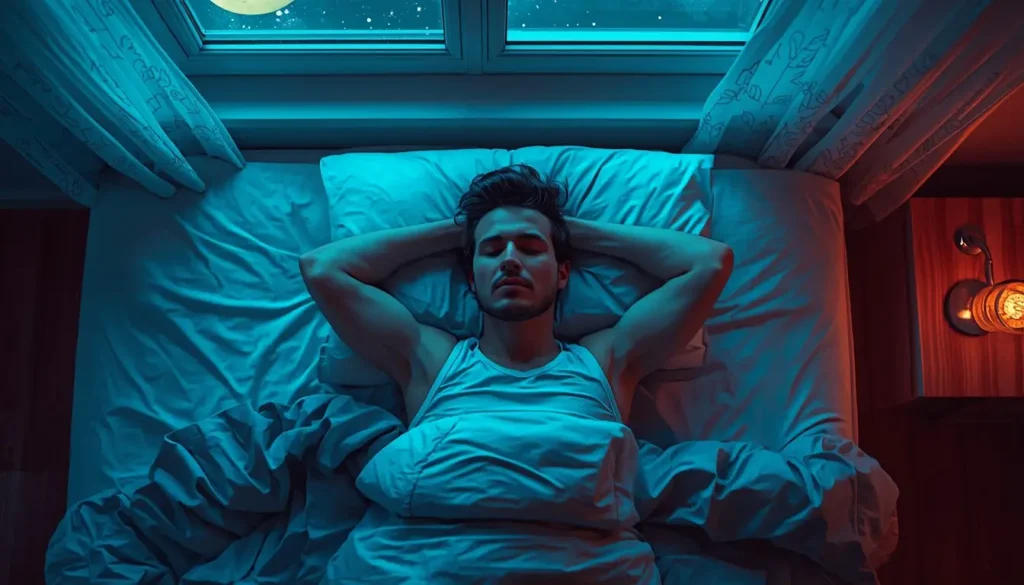
Physical tension often goes unnoticed until you actively look for it and release it.
The Body-to-Mind Connection
We often carry stress in our jaw, shoulders, and hands without realizing it. Progressive Muscle Relaxation (PMR) is a systematic technique where you tense a muscle group for a few seconds and then consciously release it.
Start at your toes. Curl them tight for 5 seconds, then release and feel the tension drain away. Move to your calves, thighs, buttocks, stomach, hands, shoulders, and finally your face. By the time you reach your head, your body should feel heavy and limp.
This physical relaxation sends feedback to the brain. It is difficult for the mind to remain alert and anxious when the physical body is in a state of profound relaxation. This technique is widely recommended by the Mayo Clinic as an effective behavioral therapy for insomnia.
Tools & Resources for Better Sleep
While the goal is to fall asleep faster naturally without dependency, certain non-invasive tools can support your biology.
Sleep Journals: Keeping a “worry journal” on your nightstand allows you to “download” your thoughts onto paper before turning off the light, clearing mental RAM.
Sleep Masks: A high-quality, contoured sleep mask creates total darkness, which is essential if your room has ambient light pollution.
White Noise Machines: These devices create a consistent sound environment (sound masking) that prevents your brain from being startled by sudden noises like a car door slamming or a dog barking.
Weighted Blankets: Based on the science of Deep Pressure Stimulation (DPS), the weight mimics the feeling of being held, which can lower cortisol and increase serotonin levels.
If you struggle with sleep consistency, bookmark this page and try one technique each night instead of everything at once.
Real Stories: Restoring the Rhythm
Case Study: The Shift Worker “Sarah,” a graphic designer, struggled with a delayed sleep phase. She would work until 11 PM and stare at her screen, leaving her wired until 2 AM. She implemented the “digital sunset” rule. At 9 PM, she switched her devices to greyscale mode and put on blue-light blocking glasses. She also introduced a 10-minute stretching routine to replace late-night scrolling. Within two weeks, her sleep onset latency dropped from 90 minutes to 20 minutes.
Case Study: The Over-Thinker “Mark” found that his anxiety spiked the moment the lights went out. He began using the Cognitive Shuffling method. Instead of fighting his thoughts, he played the word game in his head. He reported that he rarely made it past the third letter of his chosen word before drifting off. This mental distraction proved more effective for him than generic meditation.
Frequently Asked Questions (FAQ):
Q: How long should it take to fall asleep naturally?
A: A healthy sleep latency (the time it takes to fall asleep) is typically between 10 to 20 minutes. If you fall asleep instantly (under 5 minutes), it may indicate severe sleep deprivation. If it takes longer than 20-30 minutes regularly, you may have sleep onset insomnia or a circadian misalignment.
Q: Does reading help you fall asleep faster naturally?
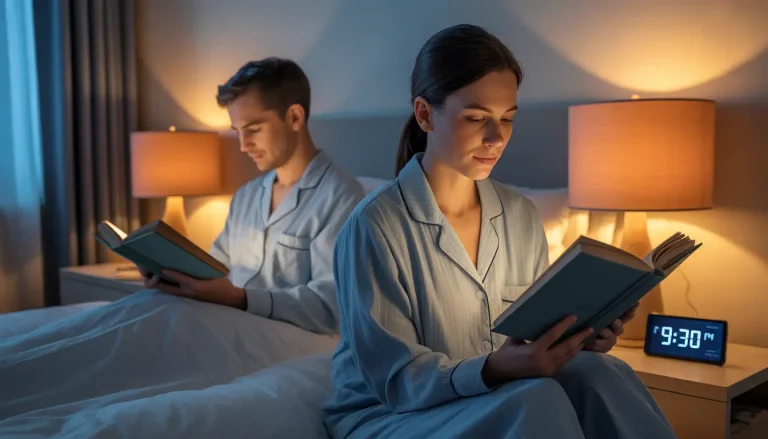
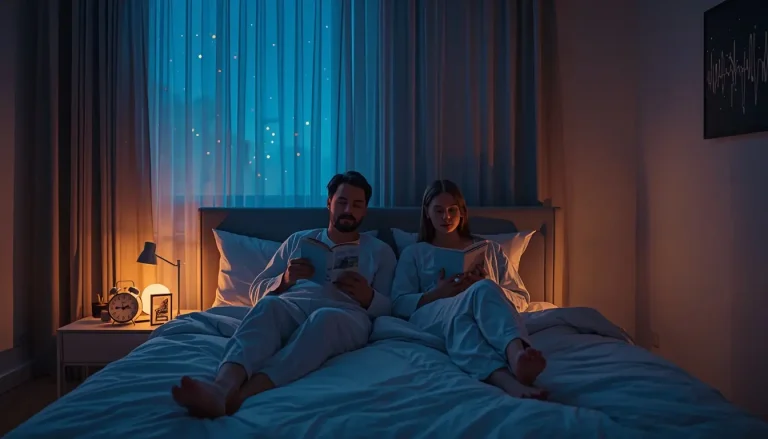
A: Yes, provided it is a physical book and not a backlit screen. Reading fiction is generally better than non-fiction, as it engages the imagination rather than the problem-solving centers of the brain. Keep the lighting low to avoid melatonin suppression.
Q: Can exercise help me sleep, or will it wake me up?
A: Regular moderate aerobic exercise increases the amount of deep sleep you get. However, intense exercise raises cortisol and body temperature. It is best to finish heavy workouts at least 3 hours before bed to allow your body to cool down.
Q: What if I wake up in the middle of the night?
A: This is known as sleep maintenance insomnia. Avoid looking at the clock, as this triggers “math anxiety” (calculating how much sleep you have lost). If you cannot return to sleep after 20 minutes, get out of bed and do a quiet, low-light activity like reading until you feel sleepy again.
Q: Is napping bad for falling asleep at night?
A: Long naps or late naps can “steal” the sleep pressure (adenosine) you need for the night. If you must nap, keep it under 20 minutes and complete it before 3 PM to ensure you are tired enough to fall asleep faster naturally at bedtime.
Q: Does magnesium help with sleep onset?
A: Magnesium plays a role in supporting the parasympathetic nervous system and muscle relaxation. While many people find dietary sources of magnesium (like leafy greens, nuts, and seeds) helpful for relaxation, you should always consult a healthcare provider regarding nutritional needs.
Final Verdict:
Reclaiming your ability to rest is not about finding a magic pill; it is about respecting your biology. By managing light exposure, regulating your temperature, and using cognitive tools to calm the mind, you can retrain your body to power down efficiently. Remember, consistency is the language your circadian rhythm understands best.