

The Science-Backed Digital Minimalism Lifestyle for Focus and Mental Clarity
Key Takeaways:
- It is not about rejection: True digital minimalism is not about rejecting technology, but about aggressively curating it to support your biological and psychological health.
- The 23-minute rule: Research suggests it takes approximately 23 minutes to fully regain deep focus after a digital interruption, highlighting the biological cost of “multitasking.”
- Dopamine regulation: Adopting this lifestyle helps reset your brain’s dopamine baseline, reducing the sensation of “twitchy” anxiety when away from a screen.
- The 30-day threshold: Neuroplasticity requires time; expect a minimum of 30 days of consistent practice to rewire your brain’s default response to boredom.
In the modern era, our biological hardware is struggling to keep pace with our digital software. Many of us experience a low-grade, constant hum of anxiety a phantom vibration in our pockets or an inexplicable urge to refresh a feed that hasn’t changed. This is not a failure of willpower; it is a physiological response to an environment designed to hijack your attention.
Adopting a digital minimalism lifestyle is not merely an aesthetic choice or a trend for productivity gurus. It is a fundamental intervention for your cognitive health. When we exist in a state of “continuous partial attention,” our cortisol levels remain elevated, and our prefrontal cortex the area responsible for executive function becomes fatigued.
According to data discussed by Harvard Health, constant connectivity can trigger the brain’s “fight or flight” response, leading to chronic stress and sleep disruption. This guide removes the hype and focuses on the biology. We will explore how curating your digital environment can lower your resting heart rate, improve deep sleep, and restore your capacity for sustained thought. You will learn how to transition from being a passive user to an active master of your technology, using protocols grounded in neuroscience.
1. What Is a Digital Minimalism Lifestyle?

A digital minimalism lifestyle is a philosophy of technology use where you focus your online time on a small number of carefully selected and optimized activities that strongly support your values, and then happily miss out on everything else. It is a deliberate shift from being a passive consumer of algorithms to an active curator of tools, designed to lower cognitive load and regulate dopamine.
Moving Beyond the “Detox” Myth:
Many people confuse digital minimalism with a “digital detox.” A detox is a temporary break like a crash diet that usually results in a rebound effect where the user binges on technology once the period is over. In contrast, a digital minimalism lifestyle is a permanent restructuring of your environment.
Biologically, this distinction is crucial. A short break may temporarily lower stress, but it does not change the neural pathways associated with habit formation. Minimalism involves “synaptic pruning,” a process where the brain eliminates weak or unused neural connections. By consistently choosing not to engage with low-value digital triggers, you physically weaken the neural loop that connects “boredom” with “check phone.” This creates a sustainable, long-term change in how your brain reacts to downtime, moving from a frantic search for stimulation to a calm acceptance of solitude.
The Philosophy of Utility:
The core tenant of this lifestyle is utility. A minimalist asks: “Does this specific tool add value that outweighs the biological cost of its intrusion?” Every app on your phone exacts a toll. It demands a fraction of your attention span and contributes to “attention residue” the cognitive fog that remains when you switch tasks.
By adopting this lifestyle, you treat technology like a power drill or a lawnmower: essential tools kept in the shed for specific jobs, not carried in your pocket 24/7. This approach protects the prefrontal cortex from the exhaustion of constant filtering. When you remove the clutter, you free up metabolic energy, allowing your brain to allocate resources toward complex problem-solving and emotional presence rather than filtering out digital noise.
2. How Does a Digital Minimalism Lifestyle Affect the Brain?
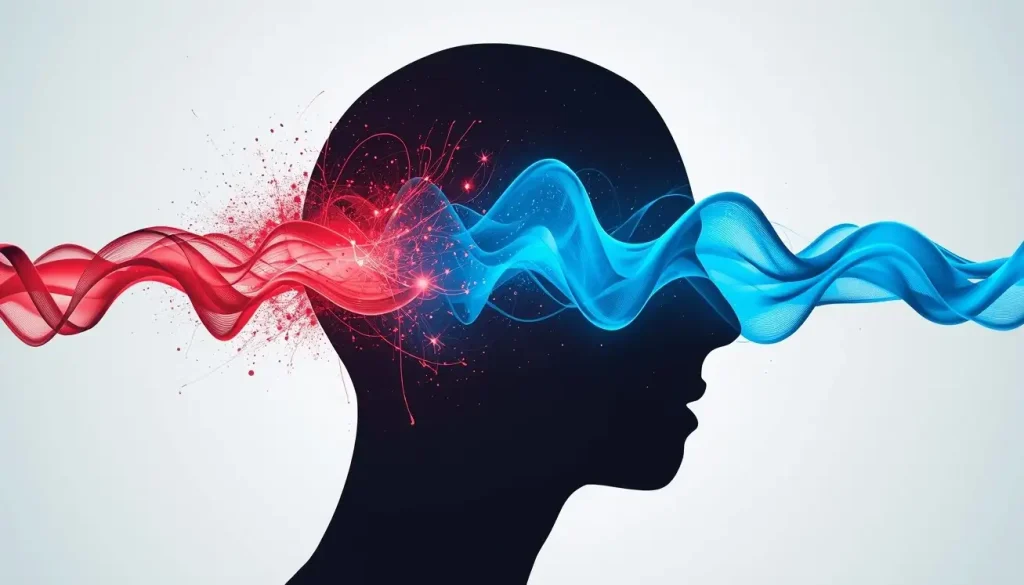
Adopting a digital minimalism lifestyle strengthens the prefrontal cortex by reducing the frequency of “task switching,” which preserves glucose and mental energy. It also helps reset the brain’s dopamine reward system, reducing the craving for variable rewards found in social media and restoring the ability to sustain attention on low-stimulation tasks like reading or deep work.
The Mechanics of Dopamine Regulation:
The primary biological mechanism at play in digital overuse is the dopamine feedback loop. Apps are engineered with “variable reward schedules” the same psychological mechanic used in slot machines. When you pull to refresh a feed, you don’t know what you will get. This uncertainty triggers a spike in dopamine, the neurotransmitter associated with craving and motivation.
Over time, the brain builds a tolerance, requiring more stimulation to feel “normal.” This is why a digital minimalism lifestyle can feel physically uncomfortable at first. You are essentially putting your brain into withdrawal. However, according to the National Institutes of Health (NIH), neuroplasticity allows the brain to adapt. By removing these high-intensity artificial stimuli, you allow your dopamine receptors to “upregulate” or become sensitive again. This restores the ability to find satisfaction in slower, less stimulating activities, effectively curing the “twitchy” feeling of modern anxiety.
Attention Residue and Cognitive Capacity:
Sophie Leroy, a business professor whose work is often cited in psychology, coined the term “attention residue.” Her research shows that when you switch from Task A (writing a report) to Task B (checking an email) and back to Task A, your attention does not fully return. A residue of your focus remains stuck on the email.
In a non-minimalist lifestyle, where checks happen every few minutes, the brain is covered in layers of this residue. You are never fully present. Digital minimalism eliminates these micro-interruptions. By checking specific technologies only at designated times (batching), you clear the residue. This allows the brain to enter “Deep Work” states, where neurons fire in synchronization to facilitate learning and complex thought, a state that is metabolically impossible when constantly distracted.
3. Why Is a Digital Minimalism Lifestyle Critical for Sleep?

A digital minimalism lifestyle is critical for sleep because it eliminates the exposure to blue-wavelength light and cortisol-spiking content in the evening. This protects the production of melatonin, the hormone required for sleep onset, and prevents physiological hyperarousal, allowing the body to enter the restorative deep and REM sleep cycles necessary for cellular repair and emotional processing.
The Circadian Connection:
Your body runs on a master clock located in the suprachiasmatic nucleus (SCN). This clock is primarily regulated by light. The blue light emitted by LED screens mimics the wavelength of the morning sun. When you view this light after sundown, you are sending a direct biological signal to your brain that it is daytime.
The SCN responds by suppressing melatonin production. A digital minimalism lifestyle enforces a “digital sunset” a specific time, usually 1-2 hours before bed, when all screens are turned off. This is not a preference; it is a biological requirement for alignment. By respecting this window, you allow melatonin to rise naturally, reducing sleep latency (the time it takes to fall asleep). The Sleep Foundation confirms that avoiding screens is one of the most effective non-pharmaceutical interventions for insomnia.
Content-Induced Hyperarousal:
It is not just the light; it is the data. Scrolling through news, work emails, or social media arguments triggers the amygdala, the brain’s threat detection center. This releases a cascade of stress hormones, including adrenaline and cortisol.
To enter deep sleep, your core body temperature must drop, and your heart rate must slow. High cortisol levels physically prevent this “power down” process, keeping the body in a state of hyperarousal. Even if you fall asleep, the quality of that sleep is often compromised, with fewer cycles of REM sleep. Minimalists who ban devices from the bedroom create a sanctuary for the parasympathetic nervous system (“rest and digest”), ensuring that sleep is actually restorative, not just unconsciousness.
Biological Impact of Digital Habits
A comparison of how different digital habits affect your physiology.
| Feature | The “Maximalist” Brain | The “Minimalist” Brain |
| Dopamine State | High baseline requirement; constant craving for stimulation. | Resensitized; finds pleasure in low-stimulation tasks (reading, talking). |
| Cortisol Levels | Chronically elevated due to constant “alert” status. | Regulated; spikes only during actual stress events. |
| Attention Span | Fragmented; difficulty focusing for >10 minutes. | Sustained; capable of 60-90 minute “Deep Work” blocks. |
| Sleep Quality | Delayed onset; fragmented REM due to blue light. | Natural melatonin rise; higher percentage of restorative deep sleep. |
4. How Can You Implement a Digital Minimalism Lifestyle?
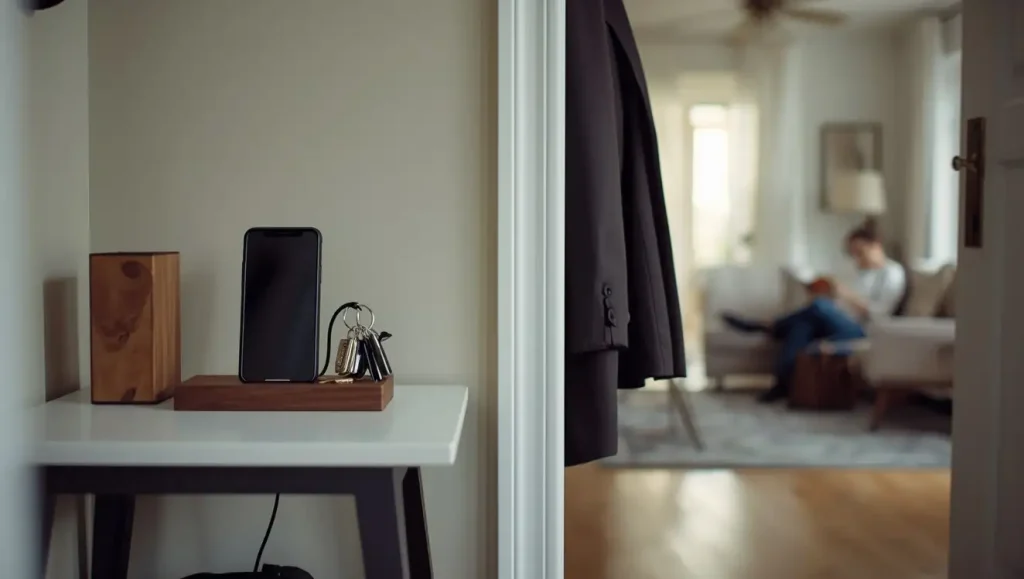
You can implement a digital minimalism lifestyle by starting with a 30-day “digital declutter” to break habit loops, followed by reintroducing only essential tools with strict boundaries. Key protocols include establishing “phone-free zones” in your home, turning off all non-human notifications, and using the “Phone Foyer Method” to create physical separation between you and your device.
The 30-Day Digital Declutter:
To truly reset your biology, you cannot simply “try to use your phone less.” Willpower is a finite resource that depletes throughout the day. Instead, you need a protocol. The standard recommendation is a 30-day declutter.
During this period, you remove all optional technologies from your life. If an app is not required for your employment or immediate safety, it is deleted or blocked. This period is often difficult. You will face boredom and anxiety. This is the “detox” phase where your brain chemistry recalibrates. By the end of the 30 days, you do not simply let the apps back in. You rebuild your digital life from scratch, only admitting tools that pass a strict “value vs. cost” analysis. This breaks the automaticity of your habits, moving you from unconscious usage to conscious choice.
The Phone Foyer Method:
Environmental design is more powerful than willpower. One of the most effective strategies for a digital minimalism lifestyle is the “Phone Foyer Method.” When you enter your home, your phone remains plugged into a charger in the entryway (or foyer).
If you need to use it, you stand in the foyer and use it there. You do not carry it to the couch, the dinner table, or the bedroom. This creates “friction.” Human biology is wired to conserve energy; we follow the path of least resistance. If the phone is out of reach, the urge to check it usually isn’t strong enough to make you stand up and walk across the house. This simple spatial change can reclaim hours of attention every evening without requiring active mental effort.
5. Why Does Batching Work in a Digital Minimalism Lifestyle?

Batching works in a digital minimalism lifestyle because it aligns with the brain’s inability to multitask. By grouping digital tasks like checking emails or messages into specific time blocks (e.g., three times a day), you minimize the “cognitive switching penalty” and allow the brain to maintain prolonged states of focus, reducing mental fatigue and increasing productivity.
Preserving Executive Function:
Every time you shift your attention, your prefrontal cortex burns glucose to reorient to the new context. If you check your phone 100 times a day (a standard average), you are forcing your brain to “reboot” 100 times. This leads to what researchers call “executive dysfunction” by the late afternoon that feeling where you can no longer make decisions or focus on simple tasks.
Batching is the antidote. In a digital minimalism lifestyle, you might schedule distinct blocks: 9:00 AM, 1:00 PM, and 5:00 PM for all digital communication. During the intervals, the brain is allowed to work on a single track. This preservation of executive function means you end the day with energy left over for hobbies, family, or personal growth, rather than collapsing in a state of depletion.
The Standard of Availability:
A common fear is that batching makes you unresponsive. However, most urgencies are manufactured. Unless you are a first responder, very few messages require a response within 60 seconds.
By training your social and professional circles to expect responses within hours rather than minutes, you reclaim control over your time. This sets a boundary that respects your biology. It signals that your attention is valuable. Paradoxically, people often respect the time of those who are less available more than those who are instantly responsive, as it signals that the individual is engaged in deep, meaningful work.
6. How Does Digital Minimalism Reduce Anxiety and Cortisol?

Digital minimalism reduces anxiety and cortisol by limiting exposure to “social comparison” triggers and alarmist news, which quiets the amygdala’s threat response. By engaging in solitude and removing constant external input, the brain can process emotions and downregulate the stress response system, leading to a measurable decrease in baseline heart rate and feelings of overwhelm.
Escaping the Comparison Trap
Evolutionary psychology suggests humans assess their well-being through comparison with their tribe. Historically, this tribe was small. Today, social media exposes us to the curated highlights of millions. This hyper-stimulation of the social comparison mechanism leads to feelings of inadequacy and “fear of missing out” (FOMO).
When you adopt a digital minimalism lifestyle, you cut off this flow of distorted data. You return to comparing yourself to your immediate reality your friends, neighbors, and colleagues rather than global influencers. This aligns your social perception with reality, significantly lowering the psychological distress and anxiety associated with feeling like you are “falling behind” in life.
The Importance of Solitude:
In the context of this lifestyle, solitude does not mean isolation; it means freedom from input from other minds. When you are constantly plugged into podcasts, music, or feeds, you are never alone with your own thoughts.
The American Psychological Association (APA) recognizes that lack of solitude prevents emotional processing. If you have a stressful interaction at work but immediately distract yourself with a phone, that stress is never processed; it is repressed. It accumulates as background anxiety. Digital minimalism reintroduces pockets of silence during a commute, a walk, or doing dishes. These moments allow the brain to “digest” the day’s events, resolving low-level conflicts and reducing chronic stress accumulation.
Essential Tools & Resources for digital minimalism lifestyle
Implementing a digital minimalism lifestyle is less about willpower and more about “choice architecture”designing your environment so the healthy choice is the easy choice. Below are the specific behavioral tools and conceptual frameworks used to support this biological reset.
1. Grayscale Mode (The Anti-Stimulant)
What it is: A setting available on almost all smartphones (usually under Accessibility > Display) that strips the screen of color, rendering everything in shades of gray.
- How to use it: Set your phone to “Grayscale” permanently, or at least from 6:00 PM to 9:00 AM.
- The Biology: Human brains are evolved to seek out bright, saturated colors (specifically red) as they signal ripe fruit or danger. App icons are designed with these specific triggers. By removing color, you remove the “salience” or emotional attractiveness of the screen. A gray Instagram feed is biologically boring, which naturally reduces the urge to scroll.
2. The “Analog Sunday” Protocol
What it is: A scheduled 24-hour period, typically from Saturday evening to Sunday evening, where you engage with zero screens.
- How to use it: Inform close family/friends in advance that you will be offline. Turn devices off and place them in a drawer. Plan analog activities (hiking, reading, cooking) to fill the void.
- The Biology: This acts as a short-term “dopamine fast.” It forces your brain to confront low-stimulation environments. This period allows the “Default Mode Network” (DMN) of the brain to activate, which is responsible for creativity, self-reflection, and future planning processes that are suppressed when processing external digital data.
3. The “Physical Friction” Charging Station
What it is: Moving the charging point of your phone out of the bedroom and main living areas to a low-traffic zone, like a hallway or foyer.
- How to use it: Buy a standard charging cable and plug it into an outlet near your front door. This becomes the phone’s “home.” It does not leave this spot unless you are leaving the house.
- The Biology: This utilizes the “Laziness Principle.” If you have to physically stand up and walk to another room to check a notification, the “cost” of the action often outweighs the “reward.” This prevents the unconscious, habitual checking loop that happens when the phone is within arm’s reach.
4. The Single-Tasking Timer (Visual Anchors)
What it is: Using a physical timer (like a kitchen timer or a sand hourglass) to delineate work blocks, rather than a phone app.
- How to use it: Set a physical timer for 60 or 90 minutes for “Deep Work.” Do not switch tasks until the timer rings.
- The Biology: Using a phone for a timer is a trap; looking at the time often leads to seeing notifications. A physical object anchors your intention in the physical world. It reduces “attention residue” by creating a clear, sensory boundary between “focus time” and “break time.”
5. The “Wait-to-Send” Rule
What it is: A behavioral rule where you draft non-urgent messages but wait to send them until a designated “communication block.”
- How to use it: If you think of a text to send a friend at 10:00 AM, write it down on a notepad. Send it during your 5:00 PM batching window.
- The Biology: Immediate communication creates an “open loop” in your brain—you subconsciously wait for a reply. This low-level anticipation creates anxiety and distraction. By delaying the send, you keep your mind closed to incoming data until you are ready to process it, preserving your cortisol baseline.
Real-Life Shifts After Adopting Digital Minimalism:
Case Study 1: The Executive Reset James, a 34-year-old project manager, suffered from “phantom vibration syndrome” and chronic insomnia. His job demanded high connectivity, but his health was failing. He adopted a digital minimalism lifestyle by implementing the “Phone Foyer” rule and batching his emails to three 30-minute windows per day.
- The Result: Within two weeks, his sleep tracker showed a 40% increase in Deep Sleep. More importantly, his reported anxiety levels dropped significantly. He found that by not reacting instantly to every email, his team actually became more autonomous, solving problems they previously would have escalated to him.
Case Study 2: The Connected Parent Sobia, a mother of three, realized she was scrolling social media while playing with her toddlers. She felt guilty and distracted. She decided to delete all social media apps from her phone, checking them only on her laptop on Saturday mornings.
- The Result: Sarah described the first week as “boring,” but the second week as “liberating.” Her patience increased because her brain wasn’t constantly trying to task-switch between the digital world and the physical world. She re-engaged with photography as a hobby, taking photos for art rather than for “likes.”
If you want to go deeper into how overstimulation affects motivation and why boredom is actually useful for rebuilding focus, explore our detailed guide on dopamine detox benefits. It explains how reward sensitivity resets and why low-stimulation habits feel easier over time.
Frequently Asked Questions (FAQ):
Q: What is the first step to starting a digital minimalism lifestyle?
A: The first step is usually a “digital declutter” or a 30-day reset. This involves removing all non-essential technologies to break the immediate addiction cycle and gain clarity on what you actually need.
Q: Will I miss important news if I adopt this lifestyle?
A: No. Important news will find you. The “breaking news” cycle is designed to keep you anxious. By checking a curated news source once a day (e.g., a morning newspaper or a specific website), you stay informed without subjecting your nervous system to constant trauma.
Q: Can I be a digital minimalist if I work in IT or Social Media?
A: While habit formation varies, physiological cravings related to blood sugar often subside within 7 to 10 days of consistent dietary correction and improved sleep hygiene. The psychological habit may take closer to 30 days to fully rewire.
Q: How does this lifestyle improve mental health?
A: By reducing the constant influx of curated “perfect” lives from social media, you reduce the psychological trigger of social comparison. This lowers feelings of inadequacy, depression, and anxiety, allowing you to be content with your own reality.
Q: Is digital minimalism the same as being a Luddite?
A: No. A Luddite rejects technology. A digital minimalist embraces technology but demands that it serves a high-value purpose. It is about being the master of the tool, rather than the servant of the notification.
Final Verdict:
Adopting a digital minimalism lifestyle is the most effective way to reclaim your cognitive autonomy in the 21st century. It is a biological necessity for those seeking to lower stress, improve sleep, and protect their mental health. By understanding the neuroscience of attention and implementing boundaries like the “Phone Foyer” method and batching, you can move from a state of fractured distraction to one of deep, meaningful engagement.
The evidence is clear: reducing digital noise leads to lower cortisol, better sleep, and improved focus. The path requires effort, but the result is a reclaimed mind.