


How to Boost Metabolism Naturally Without Extreme Diets or Supplements
Key Takeaways:
- Counter-Intuitive Insight: Your “gym” workouts likely account for less than 5% of your total daily calorie burn; fidgeting and walking (NEAT) matter far more.
- Specific Number: Digesting protein burns 20–30% of its calories as heat, compared to only 0–3% for fats.
- Simple Habit: Standing up once every 30 minutes can shift your biology out of a “sedentary” metabolic state.
- Realistic Expectation: True metabolic change is a slow adaptation of the endocrine system, not a 24-hour “detox” result.
A “slow metabolism” is often blamed for weight gain, low energy, and the inability to see results from diet or exercise. While it is tempting to view metabolism as a fixed genetic lottery ticket, the biological reality is far more dynamic. Your metabolism is not a static object; it is a series of chemical processes that keep you alive, and these processes are highly responsive to your environment, behavior, and inputs.
Many people believe they need expensive supplements or extreme detoxes to “fix” their energy. However, the most effective ways to influence your metabolic rate are found in the daily signals you send to your body through movement, rest, and nutrition. Most people aren’t broken their daily signals are. When these signals consistently indicate inactivity, poor sleep, or inadequate fueling, the body adapts by conserving energy rather than expending it.
In this guide, you will learn how to boost metabolism naturally by understanding the three engines of energy expenditure: your basal rate, the cost of digestion, and the energy of daily movement. We will strip away the hype and focus on the physiological mechanisms like mitochondrial function and circadian alignment that actually drive human energy systems.
- Fact: Non-exercise activity (like walking or standing) can vary by up to 2,000 calories per day between individuals.
1. Understanding the Biology of Human Metabolism:
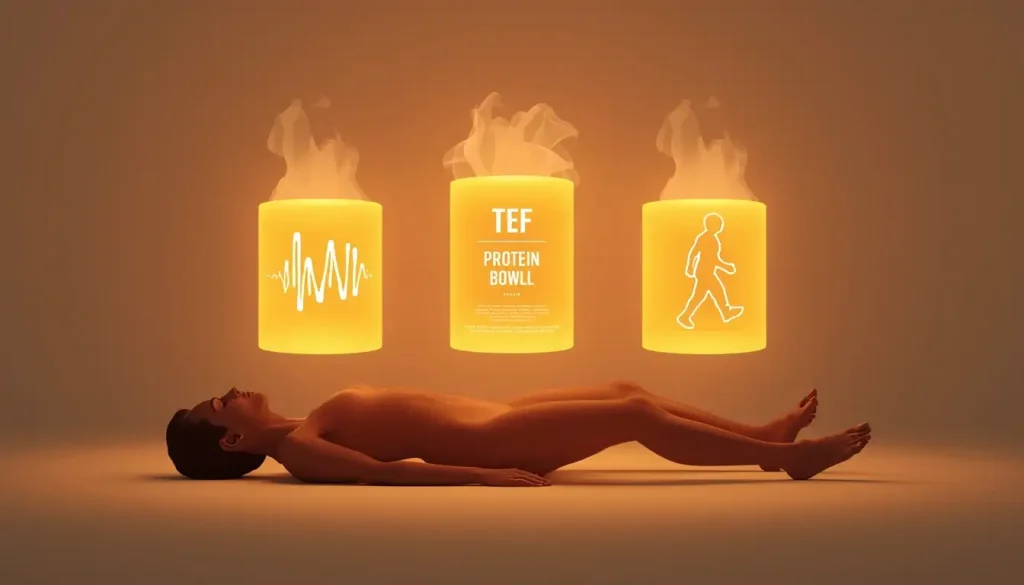
To boost metabolism naturally, you must address the three components of Total Daily Energy Expenditure (TDEE): Basal Metabolic Rate (BMR), which covers survival functions; the Thermic Effect of Food (TEF), which is energy used for digestion; and Activity Thermogenesis. Optimizing these three pillars through lifestyle changes creates a sustainable caloric deficit without “crashing” your system.
The Three Pillars of Total Energy Expenditure:
To influence your metabolism, you first need to understand the equation of Total Daily Energy Expenditure (TDEE). This is the biological “math” that determines how much energy your body uses in a 24-hour cycle.
- Basal Metabolic Rate (BMR): This is the energy your body burns just to keep the lights on breathing, circulating blood, and growing cells. It accounts for 60–75% of your total calorie burn. While largely determined by genetics and body size, it is influenced heavily by muscle mass.
- Thermic Effect of Food (TEF): This is the metabolic “cost” of processing what you eat. Digestion is an active process; your body must chemically break down nutrients, which requires heat and energy. This accounts for roughly 10% of daily expenditure.
- Physical Activity: This is the most variable wedge of the pie. It is split into Exercise Activity Thermogenesis (EAT) your run or gym session and Non-Exercise Activity Thermogenesis (NEAT), which is everything else.
Why “Starvation Mode” is a Misunderstanding:
A common fear is that reducing calories will “crash” your metabolism. Biologically, this is known as metabolic adaptation. When you aggressively deprive the body of energy, it becomes highly efficient, effectively lowering your BMR to preserve survival.
This is an evolutionary safeguard, not a defect. The goal of boosting metabolism is not to force the body into a stressed, hyper-active state, but to signal safety and abundance so that it feels comfortable expending energy rather than hoarding it. Sustainable metabolic health comes from fueling the machine, not starving it.
2. The Hidden Power of NEAT (Non-Exercise Activity Thermogenesis):

Non-Exercise Activity Thermogenesis (NEAT) refers to the energy expended for everything we do that is not sleeping, eating, or sports-like exercise. NEAT plays a critical role in weight management, as low-intensity movements like walking, standing, and fidgeting can cumulatively burn significantly more calories than a standard one-hour gym session.
Moving Beyond the Gym:
When people want to burn more energy, they often sign up for a spin class. While cardiovascular health is vital, structured exercise (EAT) makes up a surprisingly small percentage of total energy expenditure for the average person. The true giant in the room is Non-Exercise Activity Thermogenesis (NEAT).
NEAT includes all the energy expended for everything that is not sleeping, eating, or sports-like exercise. This includes walking to work, typing, performing yard work, fidgeting, and even maintaining posture while standing.
Research indicates that the variance in NEAT between two people of similar size can be as high as 2,000 calories per day. This means one person could effectively be running a marathon’s worth of calories just by moving more throughout their day, without ever stepping foot in a gym.
The Biological Cost of Sedentariness
The modern environment is engineered to minimize NEAT. We sit in cars, sit at desks, and sit on couches. When you sit for prolonged periods, the electrical activity in your leg muscles shuts off, and the enzymes responsible for breaking down lipids (fats) in the bloodstream drop significantly.
To boost metabolism naturally, you must interrupt sedentary behavior. This does not require intensity; it requires frequency. Low-level movement signals to your cellular machinery that energy is needed constantly.
3. The Thermic Effect of Food and Protein:

The Thermic Effect of Food (TEF) is the energy required for digestion, absorption, and disposal of ingested nutrients. Protein is the most metabolically expensive macronutrient, requiring 20–30% of its calories for digestion, meaning a high-protein diet can significantly increase daily calorie expenditure compared to fats or carbohydrates.
Not All Calories Are Created Equal:
From a thermodynamic perspective, a calorie is a unit of energy. However, from a biological perspective, the source of that calorie dictates how the body handles it.
Macronutrients have vastly different thermic profiles. This difference is substantial enough that simply altering your macronutrient ratio without changing total calorie intake can change your net energy balance.
How Different Macronutrients Affect Calorie Burn During Digestion
| Macronutrient | Thermic Effect (TEF) | Net Calories (per 100 eaten) | Metabolic Impact |
| Fats | 0–3% | 97–100 | Low: Very easy for the body to store as adipose tissue. |
| Carbohydrates | 5–10% | 90–95 | Moderate: Requires energy to break down into glucose/glycogen. |
| Protein | 20–30% | 70–80 | High: Metabolically expensive to break down into amino acids. |
Protein Synthesis and Muscle Maintenance:
Increasing protein intake is one of the most consistent ways to boost metabolism naturally via diet. Beyond the immediate TEF, protein provides the amino acids necessary for Muscle Protein Synthesis (MPS).
Since muscle tissue is more metabolically active than fat tissue (burning more calories at rest), preserving or building muscle directly supports your BMR. When you combine a higher protein intake with resistance training, you protect your metabolic engine against the slowdown that typically comes with age or weight loss.
4. Sleep Architecture and Metabolic Hormones:
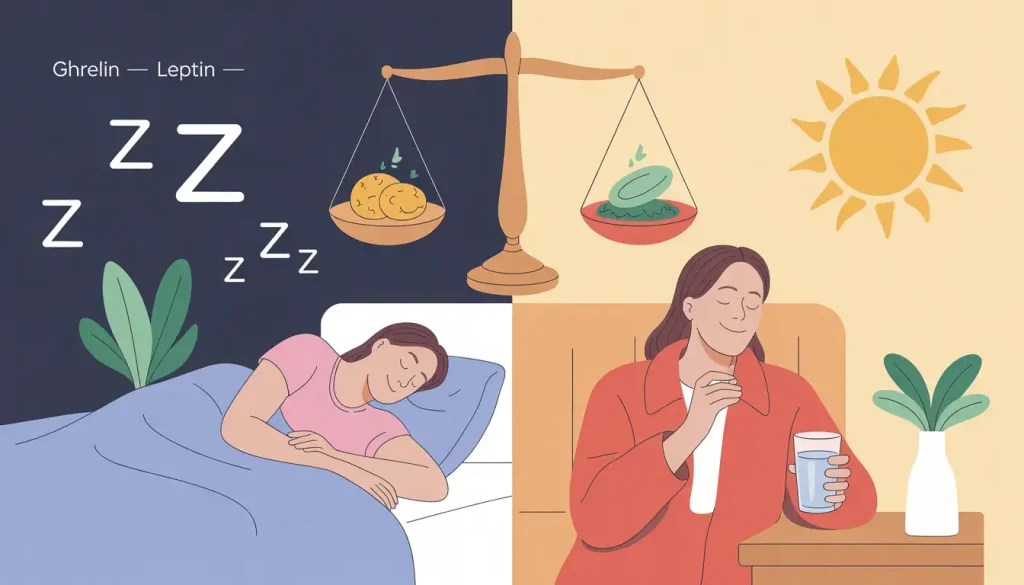
Sleep deprivation disrupts the hormones that regulate metabolism, specifically increasing ghrelin (hunger) and decreasing leptin (fullness). Furthermore, a lack of deep sleep induces insulin resistance, causing the body to store energy as fat rather than burning it, which significantly lowers your effective metabolic rate over time.
The Circadian Connection:
We often view sleep as a passive state where the body shuts down, but it is actually a period of intense metabolic maintenance. Sleep regulates the neuroendocrine system, which controls how your body partitions energy (burning fat vs. storing it).
Chronic sleep deprivation mimics the metabolic profile of aging. When you are sleep-deprived, your cells become less sensitive to insulin, the hormone that regulates blood sugar. This condition, known as insulin resistance, forces the body to store more energy as fat rather than using it for fuel.
Regulating Ghrelin and Leptin
Sleep acts as the reset button for your hunger hormones. Two key players here are:
- Ghrelin: The “hunger hormone.” It signals your brain to eat.
- Leptin: The “satiety hormone.” It signals your brain that you have enough energy reserves.
Studies show that even a few nights of short sleep (less than 6 hours) can spike ghrelin levels and suppress leptin. This creates a biological drive to seek out high-calorie, quick-energy foods (usually sugar and refined carbs). You aren’t just “tired”; your metabolic signaling is actively pushing you toward energy surplus.
5. Hydration and Water-Induced Thermogenesis:
Water is essential for lipolysis, the biological process of metabolizing stored fat into energy. Additionally, drinking cold water triggers “water-induced thermogenesis,” where the body expends energy to heat the fluid to body temperature (37°C), providing a small but consistent boost to your resting metabolic rate.
The Fluid Dynamics of Metabolism:
Water is the medium in which all metabolic reactions occur. If you are dehydrated, even slightly, mitochondrial function can slow down. However, beyond just “functioning,” water intake can acutely increase energy expenditure through a process called water-induced thermogenesis.
Some evidence suggests that drinking 500ml (about 17oz) of water can increase metabolic rate by up to 30% for about an hour. While the total calorie burn isn’t massive, the cumulative effect over weeks and months is relevant.
Cold Water and Temperature Regulation:
Part of this effect is due to the body’s need to heat the fluid to body temperature (37°C). If you drink cold water, your body must expend energy to warm it up before it can be utilized biologically.
Furthermore, water is essential for lipolysis (the breakdown of fat). The first step of metabolizing stored fat into energy requires water molecules. Without adequate hydration, the body’s ability to oxidize fat is biochemically impaired.
6. Resistance Training and Muscle Mass:

Muscle tissue is metabolically active, meaning it burns more calories at rest than fat tissue does. By engaging in resistance training, you build muscle mass which permanently elevates your Basal Metabolic Rate (BMR), while also benefiting from EPOC (Excess Post-Exercise Oxygen Consumption), which keeps calorie burn elevated for hours post-workout.
Building a Larger Engine
While aerobic exercise (cardio) burns calories during the activity, resistance training burns calories after the activity and permanently alters your BMR. Muscle tissue is metabolically expensive biological real estate. It requires more oxygen and nutrients to maintain than fat tissue does.
Every pound of muscle you add to your frame increases your resting metabolic rate. This increase is modest per pound, but cumulatively, it changes how your body handles calories 24 hours a day, 7 days a week.
EPOC (Excess Post-Exercise Oxygen Consumption)
High-intensity resistance training also generates a significant “afterburn” effect, known scientifically as Excess Post-Exercise Oxygen Consumption (EPOC). After a heavy lifting session, your body must consume extra oxygen to repair muscle fibers, replenish fuel stores, and clear metabolic waste products (like lactate).
This restoration process keeps your metabolic rate elevated for hours after you leave the gym. Unlike steady-state cardio, where the calorie burn stops shortly after you stop moving, strength training creates a metabolic debt that the body pays off by burning fat.
7. Chronic Stress and Cortisol Management:
Chronic stress triggers the release of cortisol, a hormone that signals the body to conserve energy and store fat, particularly in the abdominal area. High cortisol levels also break down muscle tissue for quick energy, lowering your Basal Metabolic Rate and making it harder to maintain a healthy metabolism.
The Stress-Metabolism Conflict:
In the modern world, stress is often psychological, but your body reacts to it physically. When you are chronically stressed, your adrenal glands release cortisol. While cortisol is necessary for life, chronically elevated levels can wreak havoc on your metabolism.
High cortisol triggers the release of glucose into the bloodstream (fight or flight response). If this energy isn’t used because you are stressed at a desk, not running from a predator the body eventually releases insulin to store that sugar back into cells, often preferentially as visceral fat around the abdomen.
The Parasympathetic Reset:
To optimize metabolism, you must balance the “fight or flight” sympathetic state with the “rest and digest” parasympathetic state. Digestion and metabolic repair occur primarily when the body is in a parasympathetic state.
Techniques like deep diaphragmatic breathing, meditation, or simply spending time in nature can lower cortisol levels. By managing stress, you prevent the hormonal environment that favors fat storage and muscle breakdown.
Simple Protocols to Activate Your Metabolism Daily
Understanding metabolism requires consistent behavioral tracking rather than expensive gadgets. Use these conceptual protocols to “audit” your lifestyle and ensure your biology is primed for energy expenditure.
1. The “NEAT” Audit Protocol
Purpose: To identify and eliminate “sedentary pockets” in your day.
- How to do it: Use your phone’s timer. Set it to vibrate every 45 minutes during your workday.
- The Action: When the timer goes off, you must stand up and move for 120 seconds. Walk to the kitchen, stretch, or do air squats. This simple interruption prevents the metabolic shutdown of leg muscles.
2. The Protein Anchor Method
Purpose: To maximize the Thermic Effect of Food (TEF) at every meal.
- The Concept: Never eat a “naked” carbohydrate (e.g., just toast or just an apple).
- The Action: Anchor every meal with a palm-sized portion of protein (20–30g). For example, add Greek yogurt to fruit, or eggs to toast. This ensures the digestive system has to work harder, burning more calories in the process.
3. The 3-2-1 Sleep Window
Purpose: To align circadian rhythms for optimal ghrelin/leptin balance.
- The Protocol:
- 3 hours before bed: Stop eating (allows insulin to drop).
- 2 hours before bed: Stop working (lowers cortisol).
- 1 hour before bed: No screens (boosts melatonin).
Real-Life Metabolism Fixes (Without Extreme Dieting):
Elena’s NEAT Transformation
Elena, a 42-year-old software developer, struggled with weight gain despite going to spin class three times a week. She felt she had a “slow metabolism” because her diet hadn’t changed. Upon tracking her daily movement, she realized that outside of her 45-minute workouts, she was averaging only 2,500 steps per day. Her job kept her in a chair for 10 hours.
Elena didn’t add more gym time. Instead, she installed a standing desk and started taking a 10-minute walk after lunch and dinner. This increased her daily steps to 8,000. Without changing her diet, her energy levels stabilized, and she began to see the body composition changes she wanted. Her “metabolism” wasn’t broken; her daily activity level had just been too low to support her intake.
Mark’s Protein Adjustment
Mark, 35, felt sluggish and noticed his weight creeping up despite eating “clean.” He was eating mostly oatmeal, salads, and fruits foods that are healthy but have a low Thermic Effect. His protein intake was barely hitting 50 grams a day.
He decided to boost metabolism naturally by prioritizing protein. He added eggs to breakfast and lean chicken or lentils to his lunch and dinner, aiming for 140g of protein daily. He noticed two things: first, he stopped snacking because he was fuller (satiety); second, he felt warmer after meals (thermogenesis). Over six months, combined with his usual hiking, his body composition shifted as he retained more muscle mass and kept his metabolic rate high.
Frequently Asked Questions (FAQ):
Q: Can certain foods really speed up my metabolism?
A: Technically, yes, but the effect is modest. Foods high in protein maximize the Thermic Effect of Food (TEF). Spicy foods containing capsaicin (like chili peppers) can temporarily increase metabolic rate and fat oxidation, but the impact is small compared to NEAT or muscle mass.
Q: Does drinking cold water burn more calories?
A: Yes. Drinking cold water forces your body to expend energy to warm the fluid to body temperature. While this does burn calories, it is a minor contributor to total daily energy expenditure compared to movement and sleep.
Q: How does age affect metabolism?
A: Metabolism generally slows down with age due to a decrease in muscle mass, hormonal changes, and a reduction in physical activity. This can lead to weight gain if caloric intake does not adjust accordingly.
Q: Is “starvation mode” real??
A: “Starvation mode” is a colloquial term for adaptive thermogenesis. If you severely restrict calories for a long time, your body will lower its BMR to conserve energy. This makes weight loss harder. It is a survival mechanism, not a permanent broken state.
Q: How long does it take to reset my metabolism??
A: There is no “on/off” switch. However, consistent changes in sleep, hydration, and protein intake can show effects in energy levels within 1–2 weeks. Structural changes, like building muscle to increase BMR, take months of consistent resistance training.
Q: Does eating late at night slow metabolism?
A: Your metabolism slows down during sleep (dropping by about 15%), but eating at night doesn’t “stop” it. The issue with late eating is often related to circadian rhythm disruption and poor food choices (snacking), which can affect insulin sensitivity and digestion quality.
Final Verdict:
Your metabolism is a complex, adaptive system designed to keep you alive. It is not a fixed destiny. While you cannot change your genetics, you have significant control over the inputs that drive your metabolic engine.
To boost metabolism naturally, you must look beyond the quick fixes. Focus on the foundational pillars:
- Increase your NEAT by moving more throughout the day, not just at the gym.
- Prioritize Protein to maximize the thermic cost of digestion and support muscle tissue.
- Protect your Sleep to regulate the hormones that control hunger and energy storage.
- Incorporate Strength Training to build the metabolically active tissue that burns calories at rest.
- Manage Stress to prevent cortisol from locking your body into fat-storage mode.
By treating your body as a biological system that thrives on movement, rest, and quality fuel, you can optimize your energy expenditure for the long term.
Want a Simple Metabolism Reset Plan?
I’m putting together a printable 7-Day Metabolism Reset Checklist that focuses on movement, protein timing, and sleep without dieting or supplements.