


The Ultimate Anti-Aging Morning Routine That Actually Works
Key Takeaways:
- Counter-Intuitive Insight: Drinking coffee immediately upon waking accelerates “energy aging” by blocking the clearance of sleep chemicals (adenosine), leading to an afternoon crash.
- Specific Timeframe: You need exactly 10 to 30 minutes of natural sunlight exposure within the first hour of waking to properly set your cellular clocks.
- Simple Habit: Adding 1/4 teaspoon of sea salt to your morning water facilitates cellular rehydration better than plain water alone.
- Realistic Effort: You do not need a 10-step skincare regimen; biological anti-aging is about signaling safety and energy production to your internal organs first.
How you spend the first 60 minutes of your day dictates the rate at which your cells age for the next 24 hours. Most people stumble out of bed, check their phone (stress), drink coffee immediately (artificial energy), and rush out the door. This chaotic sequence signals “emergency” to the nervous system, accelerating the biological markers of aging.
Learning to slow down aging naturally is not about vanity; it is about extending your “healthspan.”
A scientifically designed anti-aging morning routine is not about expensive creams or serums. It is about synchronizing your behavior with your biology. Your body operates on a strict circadian rhythm a 24-hour internal clock that regulates hormone release, DNA repair, and cellular cleanup. When you fight this rhythm, you age faster. When you align with it, you enhance your “healthspan.”
Think of your morning as the “software update” for your body. When you skip it, your system runs on yesterday’s bugs fatigue, stress, and brain fog. When you follow it, you start the day feeling clear, stable, and physically younger without relying on stimulants or shortcuts.
In this guide, we will dismantle the popular “wellness” myths and build a protocol based on physiology. You will learn why hydration, light, and protein are the three pillars of keeping your body biologically young.
If this routine feels overwhelming, start with just three steps: drink a glass of water with a pinch of salt, step outside for 10 minutes of natural light, and delay coffee for one hour. Even these small shifts create a powerful biological reset. Anti-aging is not about perfection; it is about consistent signals that tell your body it is safe, energized, and aligned with the natural day cycle.
1. What Is the Biological Goal of a Morning Routine?

The biological goal of an anti-aging morning routine is to trigger the “Cortisol Awakening Response” (CAR) effectively while clearing out metabolic waste from the brain. By sharply raising cortisol early in the day (and not later), you set the rhythm for energy production, immune function, and the eventual release of melatonin for deep sleep that night.
The Cortisol Awakening Response (CAR)
Most people demonize cortisol, but morning cortisol is critical for longevity. It is the “go” signal for your immune system and metabolism.
- The 50% Spike: Ideally, cortisol levels should increase by 50% within 30 minutes of waking. This indicates a robust, youthful adrenal system.
- Inflammation Control: This morning spike acts as a natural anti-inflammatory agent, suppressing aches and pains accumulated during the night.
- The “Flat” Curve: Aging is often associated with a “flat” cortisol curve low in the morning and high at night. A proper routine restores the youthful “high morning/low evening” slope.
Clearing Adenosine and Toxins
While you sleep, your brain accumulates adenosine (a chemical that creates sleep pressure) and metabolic waste.
- Sleep Inertia: That groggy feeling isn’t just tiredness; it is residual chemical buildup. A strategic routine flushes this out rather than masking it with caffeine.
- Glymphatic Flow: The brain’s waste clearance system works best during sleep, but the final “flush” happens upon movement and hydration in the morning.
- Mitochondrial Boot-up: Your cells’ power plants (mitochondria) need specific signals light and movement to switch from “repair mode” to “energy production mode.”
2. Why Is Hydration the First Step for Anti-Aging?
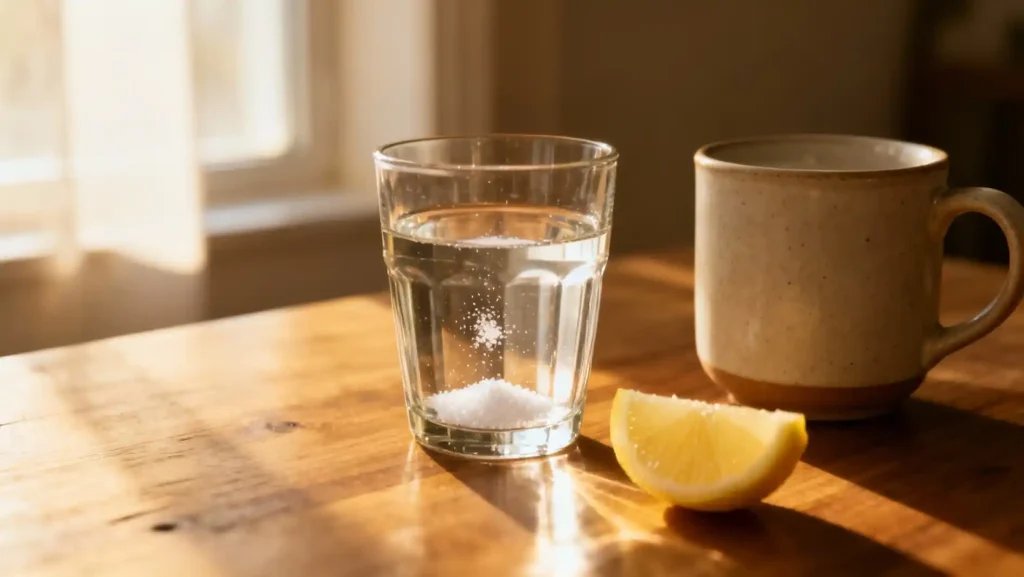
Hydration is the first step because the human body loses approximately 1 liter of water through respiration and sweat during sleep. Waking up dehydrated shrinks brain cells and impairs cellular signaling. Rehydrating immediately with electrolytes restores cell volume, reduces fatigue, and supports the elasticity of skin and connective tissue.
The Biology of Cellular Shrinkage
Water is not just a solvent; it is structural.
- Cognitive Decline: Even mild dehydration (1-2%) shrinks neurons, leading to “brain fog” and slower processing speed classic signs of cognitive aging.
- DNA Damage: Dehydrated cells are more prone to oxidative stress and DNA damage because the enzymes that repair DNA require a hydrated environment to function.
- Skin Elasticity: “Crepey” skin is often just dehydrated skin. Internal hydration plumps the extracellular matrix more effectively than topical moisturizers.
The Role of Electrolytes (Salt)
Plain water is often not enough, especially if it is filtered (which removes minerals).
- Electrical Signaling: Your nervous system runs on electricity generated by sodium and potassium. Without these, your thoughts and movements are sluggish.
- Absorption: Water follows salt. Adding a pinch of sea salt helps the water move from your stomach into your bloodstream and cells, rather than just passing through as urine.
- Adrenal Support: Your adrenal glands require sodium to function properly, especially to produce the morning cortisol spike mentioned earlier.
3. How Does Morning Light Reverse Aging?

Morning light reverses aging by entering the eyes and striking the Suprachiasmatic Nucleus (SCN), the master clock in the brain. This exposure triggers the release of dopamine and sets a timer for melatonin release 12–14 hours later. Furthermore, red and near-infrared wavelengths in morning sunlight stimulate mitochondria to produce more energy.
The Master Clock Reset
The SCN controls the timing of every cell in your body.
- Gene Expression: Thousands of genes, including those responsible for autophagy (cellular cleanup) and antioxidant production, are “clock genes.” They turn on and off based on light.
- Melatonin Anchor: Viewing sunlight by 8:30 AM anchors your circadian rhythm, ensuring you feel sleepy by 10:30 PM. Deep sleep is the ultimate anti-aging tool.
- Mood Regulation: Sunlight triggers serotonin and dopamine, preventing the age-related decline in mood and motivation.
Mitochondrial Photobiomodulation
Sunrise contains a unique spectrum of light.
- Near-Infrared (NIR) Magic: Early morning sun has high levels of NIR light, which penetrates deep into tissues.
- ATP Production: NIR light activates Cytochrome C Oxidase in the mitochondria, literally helping your cells generate more energy (ATP).
- Collagen Synthesis: There is emerging evidence that NIR light can stimulate fibroblasts to produce collagen, reducing the appearance of wrinkles.
4. Why Should You Delay Caffeine Intake?

You should delay caffeine intake by 90–120 minutes to allow the body to naturally clear residual adenosine. Drinking coffee immediately blocks adenosine receptors without clearing the chemical, leading to a massive “crash” in the afternoon. Delaying intake creates a sustainable energy curve and prevents the adrenal exhaustion associated with aging.
The Adenosine Mismatch
Caffeine does not give you energy; it borrows it.
- Receptor Blocking: Caffeine molecules look like adenosine molecules. They park in the adenosine receptors, preventing you from feeling tired.
- The Buildup: While caffeine is parked there, your body continues to produce adenosine.
- The Crash: When the caffeine wears off in the afternoon, all that built-up adenosine floods the receptors at once, causing extreme fatigue.
Protecting the Adrenals
Consuming caffeine when cortisol is already high (immediately upon waking) creates a stress redundancy.
- Tolerance Management: Delaying intake prevents the rapid development of caffeine tolerance, keeping the anti-aging benefits of coffee (polyphenols) effective.
- Cortisol Spike: Caffeine increases cortisol. If you stack this on top of your natural morning spike, you can trigger an anxiety response.
- Jitters vs. Focus: Waiting until cortisol naturally begins to drop (mid-morning) means caffeine acts as a gentle lift rather than a jittery spike.
5. How Does Movement Stimulate Longevity?

Movement stimulates longevity by mechanically activating the lymphatic system and lubricating stiff joints. Unlike the heart, the lymphatic system (which clears waste) has no pump; it relies on muscle contraction. 10 minutes of morning movement clears inflammatory stagnant fluid and signals the body to prioritize tissue repair.
Lymphatic Drainage
Stagnation leads to inflammation.
- “Puffy” Face: The morning puffiness is fluid retention. Movement helps drain this fluid back into circulation to be filtered by the kidneys.
- Immune Patrol: Lymph fluid carries immune cells. Moving circulates these cells, helping to detect and destroy pathogens or senescent cells (“zombie cells”).
- Detoxification: This is the real detox. No juice cleanse compares to the efficiency of a brisk walk or light stretching for clearing metabolic waste.
Joint and Fascia Health
“Feeling old” is often just feeling stiff.
- Synovial Fluid: Joints have no blood supply. They get nutrients through “imbibition” the pressure changes caused by movement which sucks nutrient-rich fluid into the cartilage.
- Fascial Gliding: Fascia (connective tissue) gets sticky overnight (“fuzz”). Stretching warms it up, allowing muscles to slide smoothly over one another.
- Optical Flow: Walking forward generates “optical flow” (visual motion), which calms the amygdala (fear center) and reduces anxiety for the day ahead.
6. Why Is Protein Essential at Breakfast?
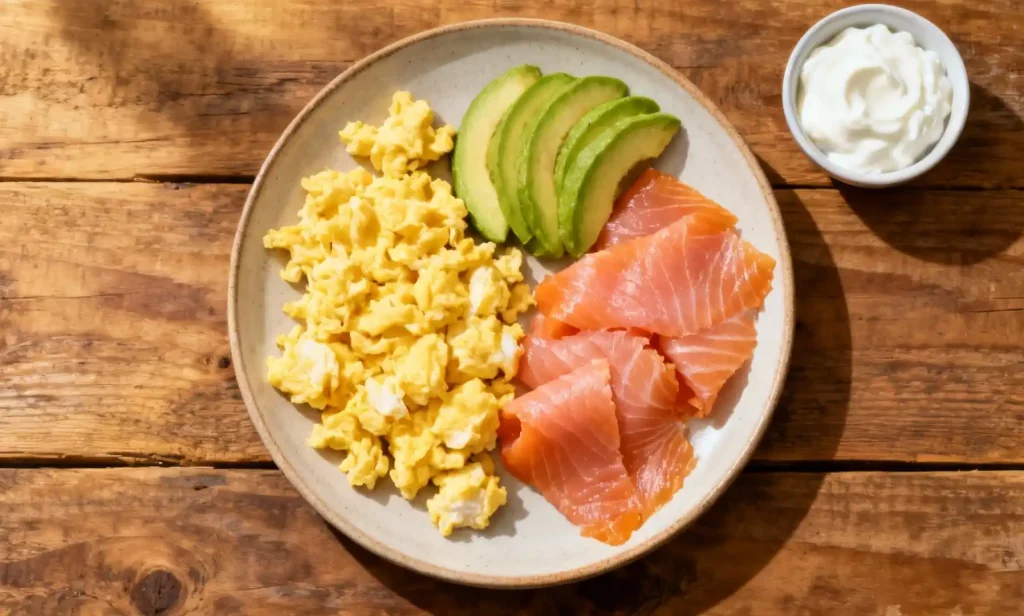
Protein is essential at breakfast because the body is in a catabolic (breakdown) state after sleeping. Consuming 30g of high-quality protein triggers “Muscle Protein Synthesis” (MPS) via the amino acid Leucine. This protects against sarcopenia (age-related muscle loss) and stabilizes blood sugar, preventing the insulin spikes that age the skin.
The Leucine Threshold
You cannot just eat “some” protein; you need enough to flip the switch.
- 30 Gram Rule: Research suggests that to trigger MPS in older adults, a minimum of 30g of protein is required in a single meal.
- Sarcopenia Defense: Muscle is the organ of longevity. It protects bones, regulates glucose, and predicts survival rates. Losing it is a primary marker of aging.
- Metabolic Rate: Protein is thermogenic (it costs energy to digest), keeping your metabolism revved up throughout the morning.
Insulin and Skin Aging
A sugary breakfast (toast, cereal) causes a glucose spike.
- Glycation: Excess sugar bonds to collagen in the skin, forming Advanced Glycation End-products (AGEs). This makes skin stiff and wrinkled.
- Stable Energy: Protein and healthy fats provide a slow-burn energy source, preventing the “hangry” stress response that spikes cortisol.
- Satiety: A high-protein breakfast regulates ghrelin (hunger hormone), preventing overeating later in the day.
Anti-Aging Morning Routine Timeline
This table outlines the ideal sequence for a longevity-focused morning.
| Time | Action | Biological Benefit |
| 0–10 Mins | Hydrate (Water + Pinch of Salt) | Re-volumize cells & activate neurons. |
| 10–30 Mins | Outdoor Light (No Sunglasses) | Reset circadian clock & boost mitochondria. |
| 10–30 Mins | Movement (Walk/Stretch) | Lymphatic drainage & joint lubrication. |
| 60 Mins | Cold Exposure (Optional) | Dopamine boost & inflammation reduction. |
| 90 Mins | Caffeine Intake | Avoid crash & maximize alertness. |
| Breakfast | 30g+ Protein Meal | Trigger muscle synthesis & stabilize glucose. |
Morning Tools That Support Longevity
These tools are not about buying products; they are about leveraging environmental stimuli to trigger specific physiological responses. Each tool serves as a “key” to unlock a specific anti-aging mechanism in your cells.
1. The Lux Meter App (Light Measurement)
- What it is: A free application available on most smartphones (e.g., “Lux Light Meter”) that uses the phone’s camera sensor to measure the intensity of light in your environment.
- The Biological Mechanism: The specialized cells in your retina (melanopsin ganglion cells) that reset your circadian clock are not sensitive to “shapes” or “colors,” but to light intensity. They typically require a threshold of 10,000 to 100,000 LUX to send the “wake up” signal to the Suprachiasmatic Nucleus (SCN). Standard indoor office lighting is often only 500 LUX biologically, this is “darkness” to your clock, which fails to trigger the cortisol spike needed for energy.
- Protocol: Open the app and point your phone at the sky (never directly at the sun) or your light source. If it reads under 10,000 LUX, stay outside longer or get closer to the window/light source.
2. Unrefined Mineral Salt (Celtic or Himalayan)
- What it is: Salt that has not been bleached or stripped of its trace minerals, retaining magnesium, potassium, and calcium.
- The Biological Mechanism:
- Adrenal Function: The adrenal glands require sodium to act as a raw material for producing hormones, including cortisol and aldosterone (which regulates blood pressure).
- Cellular Osmosis: Plain water is hypotonic (lower concentration of solutes than your blood). If you drink liters of plain water, the body may excrete it rapidly to maintain balance. Adding salt makes the water isotonic, allowing it to cross the cell membrane and actively rehydrate the cytoplasm, volumizing the cell and preventing the “shriveled” state associated with aging.
- Protocol: Add 1/4 teaspoon to 16oz of room-temperature water immediately upon waking.
3. “Forward Ambulation” (Optic Flow)
- What it is: The deliberate act of walking forward in an open space where objects pass by your peripheral vision.
- The Biological Mechanism:
- Amygdala Suppression: When you move forward, images stream past your eyes. This phenomenon, known as “optic flow,” directly communicates with the brain’s fear center (the amygdala). It signals that you are moving through space and are not trapped, which lowers background anxiety and the stress hormone baseline for the day.
- Motor Cortex Activation: Engaging the large muscle groups of the legs releases myokines (like Irisin) that travel to the brain and support the health of neurons (neuroprotection).
- Protocol: Walk outdoors for at least 10 minutes. Treadmills work less effectively for “optic flow” because the visual environment is static.
4. The Cold Plunge / Cold Finish
- What it is: Exposing the body to uncomfortably cold water (below 60°F / 15°C) for a short duration.
- The Biological Mechanism:
- Cold Shock Proteins: The thermal shock triggers the liver to release “cold shock proteins” (like RBM3), which scour the brain for damaged synapses and repair them a powerful anti-neurodegenerative mechanism.
- Brown Fat Activation: Cold stimulates Brown Adipose Tissue (BAT), a metabolically active fat that burns glucose and white fat to generate heat. Increased BAT activity is linked to improved insulin sensitivity and longevity.
- Dopamine Baseline: Cold exposure causes a sustained release of dopamine (up to 250%) that lasts for hours, boosting mood and focus without the crash associated with stimulants.
- Protocol: Turn your shower to the coldest setting for the final 30–60 seconds. Focus on controlling your breath (slow exhales) to suppress the panic reflex.
From Fatigue to Energy: Real Examples
The “Coffee First” Executive Robert, 45, felt “old” every morning. His joints ached, and he needed three cups of coffee just to answer emails. By 2:00 PM, he was exhausted and craving sugar. He decided to test the “90-minute delay” rule. Instead of coffee first, he drank salt water and walked his dog for 15 minutes. The first three days were brutal (withdrawal headaches), but by day five, he noticed something profound: he woke up alert. His afternoon crash disappeared. He realized his “fatigue” was actually dehydration and caffeine dependency masquerading as aging.
The “Indoor” Architect Sarah, 50, spent her mornings in a dimly lit gym and then a dark office. She suffered from insomnia and “dull” skin. She implemented the sunlight protocol, spending 20 minutes on her balcony with her tea (herbal) before checking her phone. Within two weeks, her sleep onset latency dropped from 60 minutes to 15 minutes. Her skin looked rosier not from creams, but from the improved circulation and deep sleep that the morning light had enabled.
(Note: Names and identifying details have been adjusted to preserve privacy while maintaining biological accuracy)
Frequently Asked Questions (FAQ):
Does this routine work if I wake up before the sun?
Yes, but you need to modify it. Turn on as many bright overhead lights as possible (or use a SAD lamp/lightbox) to simulate daybreak. Once the sun actually rises, try to get outside for at least 10 minutes to get the specific UV/Infrared spectrum that lamps cannot perfectly replicate.
Can I eat before the 90-minute mark?
Absolutely. The 90-minute rule applies primarily to caffeine. If you are hungry, eating a high-protein breakfast within an hour of waking is excellent for metabolism. Just save the coffee for after the meal.
What if it is cloudy or raining?
You need more time outside, not less. Clouds scatter light, but UV rays still penetrate. On a cloudy day, you may need 20–30 minutes of exposure to trigger the same biological signal that 10 minutes of direct sun provides.
Is cold water on my face enough?
If you can’t handle a cold shower, splashing cold water on your face is a good alternative. It triggers the “Mammalian Dive Reflex,” which slows the heart rate and increases alertness, though it won’t have the same full-body metabolic benefits as a cold shower.
What is the best morning routine for anti-aging?
The “best” routine is one that signals safety and energy to your cells. Biologically, this follows a specific sequence:
Hydrate: Drink 16oz of water with electrolytes to re-volumize shrunken cells.
Light: Get 10–20 minutes of sunlight to reset the SCN (master clock) and trigger antioxidant genes.
Movement: Walk for 10 minutes to drain inflammatory lymph fluid.
Nourish: Eat 30g of protein to trigger muscle synthesis.
Delay Caffeine: Wait 90 minutes to prevent an adenosine crash.
What is the best face routine for anti-aging?
While products matter, the order and protection are key. A science-backed morning face routine focuses on defense against environmental damage:
Gentle Cleanse: Do not strip natural oils; use a pH-balanced cleanser.
Vitamin C Serum: Acts as an antioxidant to neutralize free radicals from pollution and UV rays.
Moisturizer (with Ceramides): Repairs the skin barrier to lock in hydration.
SPF 30-50 (Non-Negotiable): UV radiation is responsible for 80% of visible facial aging. Sunscreen is the most effective anti-aging product in existence.
How can I look 10 years younger naturally?
You must target the “internal” causes of aging: inflammation and stagnation.
Posture: Stand up straight. Kyphosis (rounding of the back) is a primary biological marker of old age.
Grip Strength: Lift heavy things. Muscle tone prevents the “frail” look.
Sugar Reduction: Eliminate processed sugar to stop “glycation,” a process where sugar hardens collagen, leading to deep wrinkles and sagging skin.
Sleep: Prioritize 7–8 hours of sleep. This is when HGH (Human Growth Hormone) is released to repair skin and tissue.
What is the 7-Skin Method?
The 7-Skin Method is a hydration technique popular in Korean skincare (K-Beauty) that involves applying a lightweight toner or essence up to seven times in thin layers.
Why it works: Instead of one thick layer of cream that sits on top, multiple thin layers force hydration deep into the stratum corneum (outer skin layer).
The Result: This “plumps” the skin cells with water, temporarily filling in fine lines and giving the skin a “glass-like” glow without using heavy oils. It is essentially extreme cellular rehydration for the face.
This morning routine becomes even more powerful when paired with evening digital boundaries and periodic dopamine resets. Aligning both your mornings and nights creates a full 24-hour biological loop that protects focus, sleep quality, and long-term cellular health.
Final Verdict:
An effective anti-aging morning routine is a sequence of biological signals. By hydrating, seeking light, moving your body, and timing your nutrition, you tell your genes that it is daytime, resources are available, and the body is safe. This reduces the chronic stress and inflammation that drive the aging process. You are not just waking up; you are booting up your cellular operating system for longevity.