


A Science-Backed Guide to Wake Up Early Without Feeling Tired
Key Takeaways:
- The 90-Minute Rule: Waking up is about timing, not just duration.
- Light is the Key: Viewing sunlight within 30 minutes of waking triggers the cortisol pulse you need.
- Temperature Matters: Your body must warm up to wake up; a cold room helps sleep, but warmth helps waking.
- Consistency: It takes approximately 14 days to fully shift your circadian rhythm.
We have all been there. The alarm screams, you fumble in the dark to silence it, and you feel like you have been hit by a truck. Your eyes are heavy, your brain is foggy, and the warmth of the duvet feels like the only thing that matters in the world. You promised yourself you would be productive this morning, but biology seems to be fighting against you.
This heavy feeling is called sleep inertia, and it is a physiological response, not a lack of willpower.
In the modern world, we often treat sleep like a light switch something we can just turn on and off. However, your body runs on ancient biological rhythms that dictate your energy levels. If you are fighting your own biology, you will always lose. But if you understand the mechanisms of cortisol, adenosine, and circadian rhythms, you can change the game.
In this guide, we will break down the science of how to wake up early without feeling tired, transforming your mornings from a struggle into a natural, energized start to your day.
Note: According to the Centers for Disease Control and Prevention (CDC) insufficient sleep is a public health epidemic. This guide focuses on quality and timing to maximize the sleep you do get.
1.Understanding the Biology Behind Morning Grogginess:
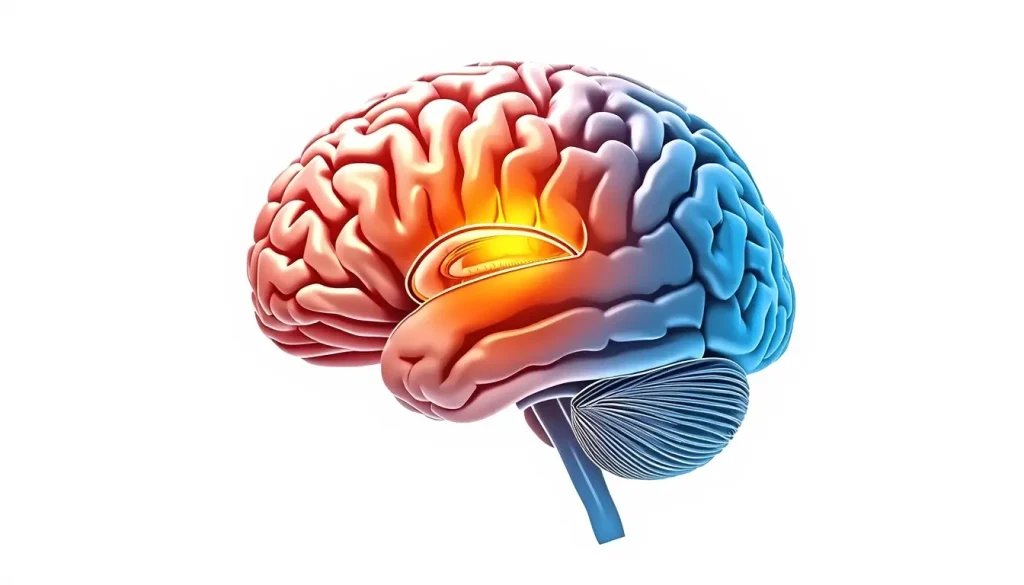
To wake up early without feeling tired, you must align your waking time with the end of a complete sleep cycle and trigger a Cortisol Awakening Response (CAR). This specific hormonal pulse clears residual adenosine the chemical responsible for sleep pressure and signals your brain to transition from a restorative state to an alert state naturally.
The Mechanism of Sleep Inertia:
Why does 7:00 AM feel so different on a Tuesday compared to a Saturday? It often comes down to sleep inertia. This is a transitional state between sleep and wakefulness, characterized by impaired performance, reduced vigilance, and a desire to return to sleep.
Biologically, this happens when you wake up during the wrong stage of sleep, specifically “Deep Sleep” (Stage 3 NREM). During deep sleep, your brain waves are slow (delta waves), and your neurochemistry is designed for repair, not alertness. If an alarm yanks you out of this stage, your brain is literally chemically unprepared to be awake.
The Cortisol Awakening Response (CAR):
Many people hear “cortisol” and think of stress, which is generally viewed as bad. However, in the context of waking up, cortisol is your best friend.
A healthy morning involves a spike in cortisol levels known as the Cortisol Awakening Response. This surge should happen within the first 30 to 45 minutes of waking. It acts as the body’s natural “go” signal, increasing your blood pressure slightly, mobilizing glucose for energy, and clearing out the fog. If you feel groggy for hours, it often means your CAR is blunted or delayed.
2.The Physics of Light: Resetting Your Internal Clock:

One of the most powerful tools to wake up early without feeling tired is also the most accessible: photon energy, or light.
The Suprachiasmatic Nucleus (SCN)
Deep in the hypothalamus of your brain sits the master clock: the Suprachiasmatic Nucleus (SCN). The SCN coordinates your circadian rhythms, but it needs an external signal to know what time it is. That signal is light.
When light hits the specialized ganglion cells in your retina (specifically melanopsin cells), it sends a direct electrical signal to the SCN. This signal tells your brain to:
- Stop producing Melatonin: The hormone that makes you sleepy.
- Increase Cortisol and Dopamine: The chemicals that make you alert and motivated.
The Protocol
To make this work, you cannot rely on standard indoor lighting. Indoor bulbs usually emit 100 to 500 lux (a unit of light intensity). To shift your circadian rhythm and wake up alert, your eyes need exposure to at least 10,000 lux.
On a clear morning, outdoor sunlight provides anywhere from 10,000 to 100,000 lux. Even on a cloudy day, the lux is significantly higher than anything inside your house.
Actionable Step: Within 30 minutes of waking up, step outside for 5–10 minutes. Do not wear sunglasses (regular prescription glasses are fine). This anchors your circadian rhythm, making it easier to wake up early tomorrow.
Comparison of Wakefulness Strategies
Here is a breakdown of what helps your biology versus what harms it when trying to wake up early.
| Strategy | Effect on Biology | Recommendation |
| Snooze Button | Fragments sleep cycles; increases sleep inertia. | Avoid. Put the alarm across the room. |
| Morning Sunlight | Triggers Cortisol Awakening Response (CAR). | Essential. 5-10 mins within 30 mins of waking. |
| Immediate Coffee | Blocks adenosine clearance; leads to afternoon crash. | Wait. Delay intake by 60-90 minutes. |
| Weekend Sleeping In | Causes “Social Jetlag”; confuses circadian rhythm. | Limit. Keep wake time within 30 mins of normal. |
| Hydration | Rehydrates tissues; signals metabolism to start. | Recommended. 16oz water immediately. |
3.Mastering the 90-Minute Sleep Cycle:
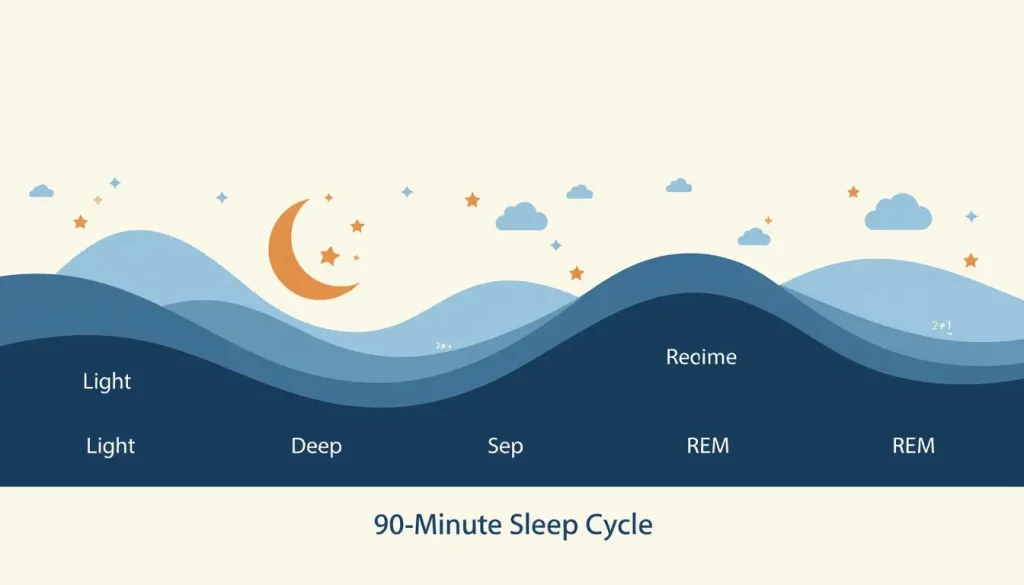
Understanding the architecture of sleep is crucial. Your sleep is not one long block of unconsciousness; it is a series of cycles.
The Architecture of a Cycle
A typical sleep cycle lasts approximately 90 minutes and consists of four stages:
- Stage 1 (NREM): Light sleep, transition phase.
- Stage 2 (NREM): Body temperature drops, heart rate slows.
- Stage 3 (NREM): Deep sleep (restorative, difficult to wake from).
- REM (Rapid Eye Movement): Dreaming, memory consolidation (closest to wakefulness).
Why Timing Matters
If you sleep for 8 hours, that is roughly 5.3 cycles. This means you might be setting your alarm to go off right in the middle of Stage 3 deep sleep. This is the “bus hit me” feeling.
To wake up early without feeling tired, you want to wake up at the end of a cycle, during light sleep or right after REM.
The Math of Waking Up
Instead of setting your alarm based on when you have to be up, calculate backward from your wake time in 90-minute increments.
- Goal Wake Time: 6:00 AM
- 5 Cycles (7.5 hours): Bedtime should be around 10:15 PM (allowing 15 minutes to fall asleep).
- 6 Cycles (9 hours): Bedtime should be around 8:45 PM.
It is often better to get 7.5 hours of synced sleep than 8 hours of interrupted, out-of-sync sleep.
4.Thermoregulation: Warm Up to Wake Up:

Your body temperature and your sleep-wake cycle are intrinsically linked. This is known as thermoregulation.
The Minimum Temperature Point
About two hours before you naturally wake up, your body reaches its “temperature minimum” the coldest point of the 24-hour cycle. After this point, your body temperature begins to rise. This rise acts as a biological trigger for wakefulness.
If you are struggling to wake up, your room might be too cold, or you may be keeping your body temperature suppressed. While a cool room (around 65°F or 18°C) is ideal for falling asleep, a warming environment helps you wake up.
Practical Application
- Hydration: Drinking room temperature or warm water immediately upon waking can help jumpstart your metabolism and internal temperature.
- Movement: Light movement (stretching or walking) increases core body temperature.
- Smart Thermostats: If you have programmable heating, set it to warm the house up 30 minutes before your alarm goes off.
5. The Adenosine Factor and Caffeine Timing:

Many people reach for coffee the second their eyes open. Biologically, this is actually counterproductive if you want to sustain energy throughout the day.
Understanding Adenosine
Adenosine is a molecule that builds up in your brain the longer you are awake. It creates “sleep pressure.” When you sleep, the brain clears adenosine away.
When you wake up, there is often a little bit of residual adenosine left.
The Caffeine Crash
Caffeine works by blocking adenosine receptors. It doesn’t remove the sleepiness; it just hides it. If you drink coffee immediately upon waking, you block the receptors before your body has had a chance to naturally clear the residual adenosine via the cortisol awakening response.
Once the caffeine wears off (early afternoon), all that hidden adenosine rushes back to the receptors, causing the dreaded “2 PM crash.”
The Science-Based Fix: Wait 60 to 90 minutes after waking up before consuming caffeine. This allows your natural cortisol to clear the adenosine first. Then, the caffeine acts as a performance enhancer rather than a crutch.
6. Social Jetlag and Consistency

You might be doing everything right during the week, but if you “binge sleep” on the weekend, you are giving yourself social jetlag.
The Weekend Trap
If you wake up at 6:00 AM on weekdays but sleep until 10:00 AM on Saturday and Sunday, you have effectively shifted your timezone by four hours. Come Monday morning, your biology thinks it is 2:00 AM when the alarm goes off. This is why Mondays are historically difficult.
To truly wake up early without feeling tired, you need regularity. Your circadian clock thrives on predictability.
The 30-Minute Rule
Try to keep your wake-up time within a 30-minute window, even on weekends. If you had a late night and need to catch up on sleep, rely on a short afternoon nap (20 minutes) or “Non-Sleep Deep Rest” (NSDR) rather than sleeping in late. This preserves your anchor point for the next morning.
Tools and Resources
To assist you in resetting your biology without buying expensive gadgets, utilize these tools::
- Sleep Calculator: Websites like sleepcalculator.com allow you to input your desired wake time and calculate the best time to fall asleep based on 90-minute cycles.
- Lux Light Meter Apps: You can download free apps on your smartphone that measure light intensity (Lux). Use this to see how bright your room is versus the outdoors.
- Brain Basics (NINDS): The National Institute of Neurological Disorders and Stroke offers excellent free diagrams and explanations of sleep stages.
Real Human Stories:
The “Night Owl” Shift:
James, a graphic designer, identified as a “night owl” for 30 years. He believed his creativity only spiked after midnight. However, his new job required 8:00 AM meetings. He felt nauseous and foggy every morning.
The Change: James didn’t change his bedtime immediately; he changed his light exposure. He forced himself to walk his dog for 10 minutes at 7:00 AM every single day, regardless of how tired he was.
The Result: Within 10 days, he naturally started getting tired earlier in the evening. His body clock shifted backward because of the morning light anchor. He now wakes up at 6:30 AM without an alarm.
The Parent of Twins:
Sarah, a mother of young twins, had broken sleep constantly. She thought waking up early was impossible.
The Change: She stopped trying to get “8 hours” and focused on “sleep pressure.” She utilized the 90-minute cycle calculation. Even if she only got 4.5 hours (3 cycles), she timed her wake-up to be at the end of a cycle.
The Result: While she was still fatigued from parenting, the grogginess and dizziness vanished. She woke up clearer-headed because she wasn’t interrupting deep sleep.
Frequently Asked Questions (FAQ):
Q: Is it possible to change my chronotype from a night owl to a morning person?
A: While genetics play a role in your chronotype, research suggests that you can shift your rhythm significantly using light and temperature cues. It is less about changing your DNA and more about entraining your clock to an earlier schedule.
Q: How long does it take to get used to waking up early?
A: For most people, it takes about two weeks of consistent wake-times to reset the circadian rhythm. The first 3–4 days are usually the hardest as your body clears the “sleep debt.”
Q: Should I use a sunrise alarm clock?
A: While natural sunlight is best, a sunrise alarm clock can be a helpful tool in winter or dark mornings. It mimics the gradual increase of light, which can help suppress melatonin before you even open your eyes.
Q: What if I wake up before my alarm?
A: If you wake up 10–20 minutes before your alarm, get up. This means your sleep cycle has naturally finished. Going back to sleep for those few minutes will likely push you into a new sleep cycle, making you feel groggy when the actual alarm goes off.
Q: Does exercise help me wake up?
A: Yes. Exercise increases core body temperature and cortisol, both of which signal the body that it is time to be awake and alert. Even light stretching or jumping jacks can be effective.
Q: Can I drink tea instead of coffee?
A: Yes, but the caffeine rule still applies. If the tea contains caffeine (like black or green tea), try to wait 60 minutes after waking. Herbal teas without caffeine can be consumed immediately.
Final Verdict:
Waking up early isn’t about having iron willpower; it is about leveraging biology. The feeling of fatigue in the morning is a chemical equation involving adenosine, cortisol, and sleep cycles.
By shifting your focus from “how long did I sleep” to “when did I wake up,” and prioritizing morning light exposure, you can manipulate these chemicals to work in your favor. It requires consistency, specifically in the first two weeks, but the result is a morning where you feel naturally alert, focused, and ready.
Want calmer mornings without forcing productivity?
Start by fixing your sleep timing and light exposure your biology will do the rest.