

The Ultimate Biology-Based Guide to the Best Bedtime Habits for Adults
Key Takeaways:
- The “Warm Bath Paradox”: A hot bath actually helps you sleep by cooling your core body temperature through vasodilation.
- The 10-3-2-1 Rule: A specific countdown structure for caffeine, food, work, and screens that beats willpower.
- Cognitive Offloading: Writing down tomorrow’s to-do list is biologically more effective than meditation for some high-stress adults.
- Consistency > Duration: Waking up at the same time is more critical for your biological clock than the exact time you go to bed.
It’s 10:30 PM. You are exhausted, physically drained from the day, yet your mind is racing at 100 miles per hour. You get into bed, hoping to drift off, but instead, you stare at the ceiling, replaying conversations or worrying about tomorrow’s emails.
This is the “tired but wired” state, and it is a modern epidemic.
Most advice on bedtime habits for adults revolves around vague tips like “relax” or “drink tea.” While well-meaning, these tips often ignore the underlying biology of how sleep happens. Sleep isn’t a switch you flip; it’s a biological landing sequence. If you miss the approach, you circle the airport for hours.
In this guide, we aren’t just going to list relaxing things to do. We are going to look at the specific physiological mechanisms like cortisol regulation, adenosine buildup, and thermoregulation that actually dictate whether you sleep or struggle. By the end, you will understand exactly how to signal to your brain that it is safe to power down.
According to the CDC, insufficient sleep is linked to chronic diseases like diabetes and heart disease, making this more than just a comfort issue it’s a critical health priority.
These bedtime habits work even better when they are supported by a structured night routine for better sleep, especially for adults with busy or irregular schedules.
1.The Biology of a Wind-Down Routine:

A biology-based bedtime habit is a deliberate action that triggers the parasympathetic nervous system (rest and digest) and aligns your internal clock (circadian rhythm) with the external environment. Effective habits work by lowering core body temperature, reducing cortisol, and blocking blue light to signal the pineal gland to produce melatonin.
Many adults treat bedtime as a finish line they crash into. Biologically, your brain needs a transition zone a “buffer” period where the sympathetic nervous system (fight or flight) hands over control to the parasympathetic system.
Think of your brain like a car engine. You cannot go from 60 MPH to 0 MPH instantly without damaging the brakes. You need to downshift. When you establish consistent bedtime habits for adults, you are essentially training your Suprachiasmatic Nucleus (the master clock in your hypothalamus) to predict sleep. Over time, this prediction becomes automatic, reducing the time it takes to fall asleep (sleep latency).
2.Light Management: The Melatonin Switch
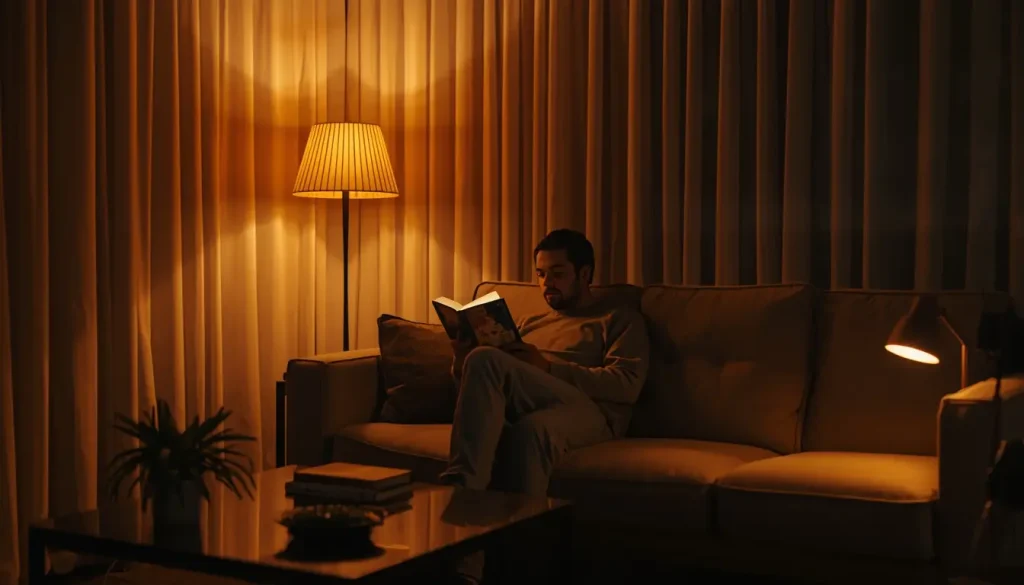
Light is the single most powerful drug you take every day. It controls your biology more than coffee or food.
When light hits the photoreceptors in your eyes, it suppresses melatonin the hormone that signals darkness. Modern LED lights and screens emit a heavy concentration of blue light, which mimics the sun at noon. If you are scrolling through your phone at 10 PM, you are chemically telling your brain it is lunch time.
The Protocol
- The Sunset Rule: As the sun goes down outside, the lights should go down inside. Switch off overhead lights after dinner.
- Red/Amber Light: Use floor lamps with warm-colored bulbs (2700K or lower) or dedicated red bulbs. Red light has the least impact on melatonin suppression.
- Screen Curfew: The gold standard is no screens 60 minutes before bed. If you must use a device, ensure it is in “Night Shift” mode or use blue-light blocking glasses.
Old School vs. Bio-Optimized Habits
Here is how to upgrade standard advice into high-performance biology.
| Traditional Advice | Bio-Optimized Habit | Why It Works |
| Drink herbal tea. | Stop fluids 2 hours before bed. | Prevents nocturia (waking up to pee), which fragments sleep cycles. |
| Relax in bed. | Only get in bed when sleepy. | Prevents the brain from associating the bed with wakefulness/anxiety (Stimulus Control Therapy). |
| Take a hot bath. | Hot bath 90 mins before, cool room. | Utilizes the “warm bath effect” to drop core temperature rapidly. |
| Don’t check email. | Write a “To-Do” list. | Offloads cognitive burden so the brain doesn’t loop on unfinished tasks. |
| Sleep in on weekends. | Wake up at the same time daily. | Anchors the circadian rhythm so melatonin releases at the correct time nightly. |
3.Thermal Regulation: The Warm Bath Paradox

Temperature is a massive, often overlooked trigger for sleep. For you to fall asleep and stay asleep, your core body temperature must drop by about 2-3 degrees Fahrenheit.
This leads to a counter-intuitive insight: taking a hot bath or shower helps you sleep, but not for the reason you think. It isn’t just because it “feels relaxing.”
When you soak in hot water, your blood vessels dilate (vasodilation). Blood rushes to the surface of your skin, your hands, and your feet. When you step out of the bath into a cooler room, that heat rapidly radiates away from your body. This causes a steep drop in core body temperature, which is a primal biological signal that it is time to sleep.
The Protocol
- Timing: Take a warm shower or bath 60–90 minutes before your target sleep time.
- The Environment: Ensure your bedroom is cool (around 65–68°F or 18–20°C). The contrast between the warm bath and the cool room is what does the work.
4.Cognitive Offloading: The “Brain Dump”

For many high-performing adults, the body is tired, but the mind is hyperactive. This is often due to high cortisol levels caused by “open loops”unfinished tasks or worries floating in your working memory.
Trying to “clear your mind” through force of will rarely works. Instead, you need to get the information out of your head. This is called cognitive offloading.
Research suggests that writing a to-do list for the next day is more effective at inducing sleep than journaling about your past day. By writing it down, you give your brain permission to stop holding onto the data.
The Protocol
- The 5-Minute Purge: Keep a notebook by your bed. Spend 3-5 minutes writing down:
- What you need to do tomorrow.
- Any nagging worries.
- A specific next step for each.
- Close the Book: Physically closing the notebook signals to your brain that “work is closed” for the night.
5. The 10-3-2-1-0 Rule
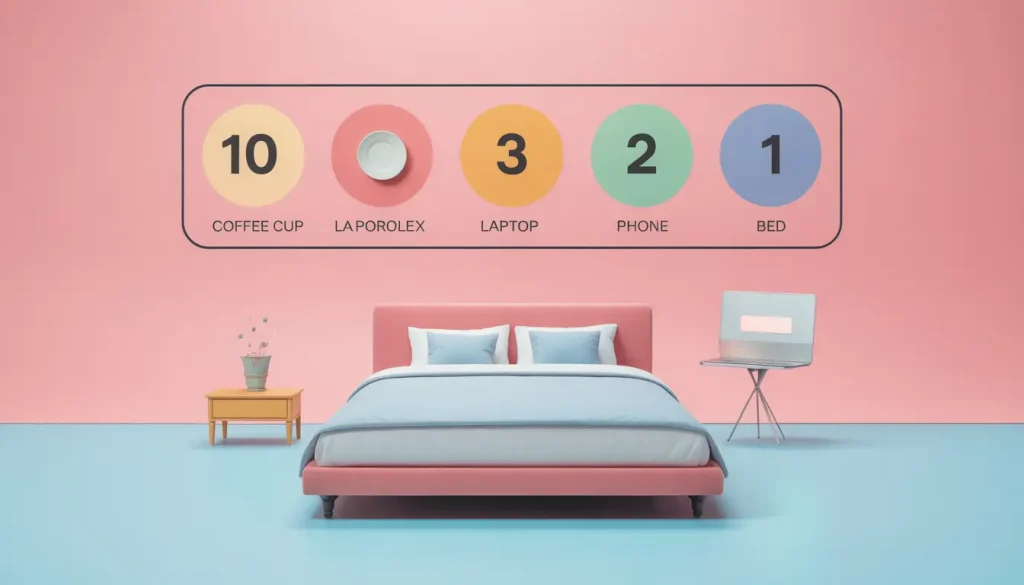
Sometimes, the best bedtime habits for adults are about what you don’t do. The 10-3-2-1-0 rule is a structured timeline used by biohackers and productivity experts to ensure the biological runway is clear.
- 10 Hours Before Bed: No more caffeine. Caffeine has a half-life of about 5-6 hours. If you drink a coffee at 4 PM, half of it is still in your system at 10 PM, blocking adenosine receptors (the chemical that makes you feel sleepy).
- 3 Hours Before Bed: No more large meals. Digestion raises body temperature and requires energy, which conflicts with the “rest and repair” mode of sleep.
- 2 Hours Before Bed: No more work. This creates a boundary for stress and cortisol.
- 1 Hour Before Bed: No more screens (phones, TVs, tablets).
- 0: The number of times you hit the snooze button in the morning.
6. Circadian Consistency: The “Sleep Gate”
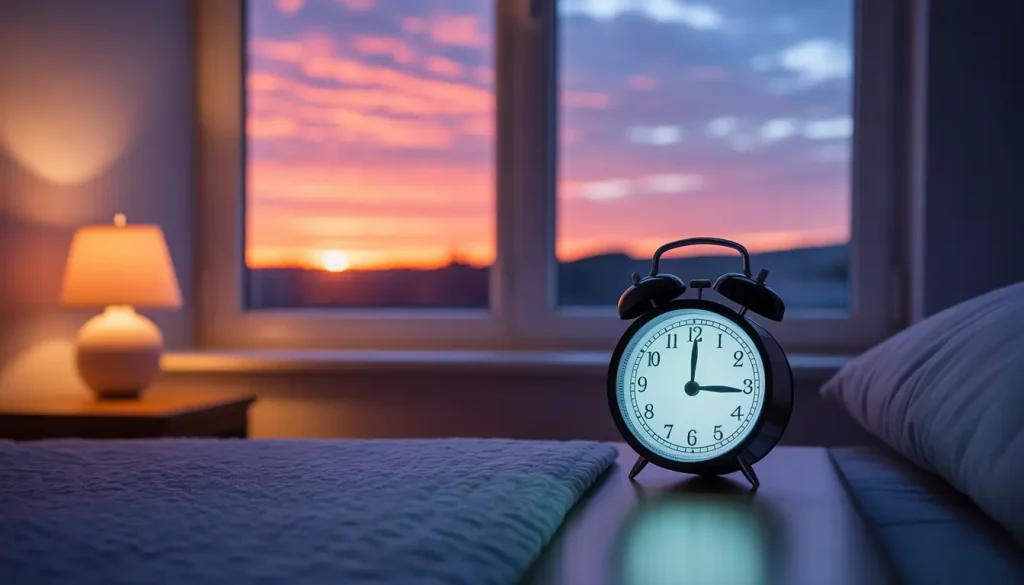
We often obsess over what time we go to sleep, but your biology cares more about what time you wake up.
Your circadian rhythm is “anchored” by your wake-up time. When you wake up and get light in your eyes, a timer starts. Approximately 12-14 hours later, melatonin secretion begins. If you change your wake-up time on weekends (social jetlag), you are constantly shifting this timer, leaving your body confused about when to feel tired.
Irregular sleep schedules are linked to poor sleep quality and fatigue, regardless of total hours slept (source: PMC Study).
The Protocol
- Anchor Your Wake Time: Pick a wake-up time you can stick to 7 days a week, plus or minus 30 minutes.
- Morning Light: Get outside for 10 minutes within the first hour of waking up. This “sets” the clock for the following night.
Tools & Resources For Best bedtime habits for adults
You do not need expensive gadgets to fix your sleep, but the right environment helps. Here are tools you likely already have or can easily find, focused purely on function.
- Analog Alarm Clock: Moving your phone out of the bedroom is the single best change you can make. A simple battery-powered clock replaces the phone alarm.
- Sleep Mask: If you cannot install blackout curtains, a comfortable, contoured sleep mask (that doesn’t press on your eyelids) ensures 100% darkness, which is vital for maintaining deep sleep.
- Earplugs: For city dwellers, silicone or wax earplugs can dampen sudden noises that might not wake you fully but will pull you out of deep restorative sleep.
- Library Books: Fiction reading (paper, not digital) is a proven way to disengage the analytical brain.
Real Stories: The Sleep Reset
Case Study 1: The “Revenge Bedtime Procrastinator” Sarah, a 34-year-old graphic designer, felt her only “me time” was between 11 PM and 01 AM. She would scroll social media or watch shows to reclaim her day. However, she was waking up groggy and anxious.
- The Fix: She didn’t cut her “me time”; she just moved it. She started her wind-down at 9:30 PM with an audiobook and sketching (offline) instead of screens. By shifting the type of stimulation from blue-light active to analog passive, she kept her relaxation time but allowed her melatonin to rise naturally.
Case Study 2: The “Over-Optimizer” Mark, 42, wore a sleep tracker, took five different supplements, and obsessed over his sleep score. His anxiety about getting a “perfect score” was actually keeping him awake (orthosomnia).
The Fix: He removed the tracker and established a simple “3-2-1” routine. He stopped measuring his sleep and started focusing on how he felt. Ironically, once he stopped trying to force the data, his natural sleep onset improved within two weeks.
Frequently Asked Questions (FAQ):
Q: Is it bad to read on a tablet if I use “Night Mode”?
A: Yes, generally. While “Night Mode” reduces blue light, it does not eliminate it. Furthermore, the content on a tablet (news, notifications, apps) is dopamine-stimulating, which keeps the brain alert. Paper books or e-ink readers (without backlights) are superior bedtime habits for adults.
Q: Can I catch up on sleep on the weekends?
A: Biologically, you cannot fully “bank” sleep. While sleeping in might help you feel less tired temporarily, it shifts your circadian rhythm (social jetlag), making it harder to fall asleep Sunday night and waking up Monday morning. Consistency is key.
Q: What if I wake up in the middle of the night?
A: Do not stay in bed tossing and turning for more than 20 minutes. This creates a psychological link between your bed and frustration. Get up, go to a dim room, and do something boring (like reading a manual or folding laundry) until you feel sleepy again.
Q: Does alcohol help with sleep?
A: Alcohol is a sedative, not a sleep aid. It may help you lose consciousness faster, but it destroys sleep quality. It suppresses REM sleep and causes sleep fragmentation (waking up frequently) as the alcohol metabolizes later in the night.
Q: How long does it take to form a new sleep habit?
A: Plasticity varies, but for sleep routines, you should typically see changes in how you feel within 10 to 14 days of strict consistency. Your circadian clock needs about a week to fully adjust to a new schedule.
Q: Are bedtime habits for adults different as you get older?
A: As adults age, melatonin production naturally declines and circadian rhythms become more sensitive to light and schedule changes. This makes consistent bedtime habits for adults especially fixed wake-up times and strict light control more important with age to maintain sleep quality.
Q: What is the single most important bedtime habit if I can only choose one?
A: If you must choose one habit, anchor your wake-up time and protect evening darkness. Waking up at the same time every day sets your circadian rhythm, while reducing light at night allows melatonin to rise naturally together, they have the biggest impact on sleep.
Final Verdict:
Fixing your sleep isn’t about buying a new mattress or taking a magic pill. It is about respecting your biology.
The most effective best bedtime habits for adults are the ones that honor your ancient hardware: your need for darkness, your need for a drop in temperature, and your need for a safe, low-stress transition into rest. Start small. Pick one habit perhaps the light management protocol or the “brain dump” and stick to it for two weeks. Your body knows how to sleep; you just need to get out of its way.